China product sourcing for Amazon sellers involves more than finding an attractive factory price: it requires checking suppliers, approving samples, confirming compliance, and planning delivery before committing inventory money.
This checklist helps US-marketplace sellers organize those decisions for 2027, from product selection through listing preparation.
Use it as a purchasing workflow, and recheck applicable rules before ordering or shipping rather than treating any checklist as permanent regulatory guidance.
What should your China product sourcing checklist cover?
Your checklist should cover commercial viability, supplier verification, product specifications, samples, product compliance, landed costs, quality control, packaging, logistics, and listing readiness.
Give each stage a clear approval condition so an unresolved issue cannot quietly move into production. Amazon also advises sellers to investigate suppliers, verify product quality and authenticity, and retain purchase documentation.
Create one sourcing file per product, with an owner and approval date for each decision. Keep quotes, specifications, test reports, inspection records, and shipping documents together rather than scattered across supplier chats.
Use these purchasing gates:
- Before requesting quotes: Define the product, target customer, specifications, and budget.
- Before paying a deposit: Verify the supplier, approve samples, and establish compliance requirements.
- Before shipment: Review inspection results, documentation, packaging, and delivery arrangements.
- Before launch: Confirm that the listing describes the inventory actually received.
Record unresolved questions beside each gate. A blank field should mean “not approved,” not “probably fine.”
Start product selection with a defensible customer need
For your amazon product sourcing shortlist, write down the customer problem each candidate solves. Review competing offers and customer feedback for specific opportunities: confusing instructions, awkward dimensions, missing accessories, or packaging that makes storage difficult. Treat those observations as hypotheses to test, not proof of future sales.
Compare candidates using the same criteria:
- Customer value: What useful improvement can you describe without exaggerated claims?
- Operational fit: Can you inspect, store, ship, and support the product with your available resources?
- Financial resilience: Would the offer remain viable with higher delivery costs or slower sales?
- Compliance readiness: Can you identify the applicable requirements before ordering?
Before buying wholesale China products bearing another company's brand, investigate authenticity and your right to sell them. Amazon recommends sourcing branded goods from reliable suppliers and retaining transaction records.
Set a rejection rule early. If you cannot explain the product's customer value or resolve a critical compliance question, pause it rather than letting supplier enthusiasm drive the decision.
Make supplier verification specific and documented
Ask each prospective supplier for its registered business name, business license, operating address, manufacturing locati0n, and contracting entity. Establish whether you are dealing with a factory, trading company, or intermediary. Evaluate the proposed arrangement rather than assuming one business model automatically guarantees quality.
Use a consistent verification checklist:
- Compare the company identity across the quotation, contract, invoice, and payment instructions.
- Request a live walkthrough focused on relevant production equipment and quality checks.
- Ask which operations are subcontracted and who approves changes.
- Request evidence relevant to your product, not unrelated certificates or customer logos.
- Independently confirm unexpected payment-detail changes through a previously established contact.
For a larger commitment, consider an independent factory assessment with a defined scope. Ask the assessor to distinguish what was observed from what the supplier merely stated.
Keep communication practical: “Show how you check this dimension” is more useful than “Do you have good quality?” Document the response and any limits on verification. Amazon's sourcing guidance emphasizes researching manufacturers and suppliers before purchasing goods.
Approve samples against a written specification
Before ordering samples, prepare a specification covering materials, dimensions, tolerances, finish, components, functionality, and packaging. Replace subjective instructions such as “premium quality” with checks someone can repeat. For example, identify the exact accessory count and the conditions under which a closure must operate.
Evaluate competing samples using the same worksheet. Test ordinary use, assembly, cleaning, storage, and foreseeable handling relevant to the product. Record weaknesses with photographs and clear descriptions rather than approving a sample through an informal message.
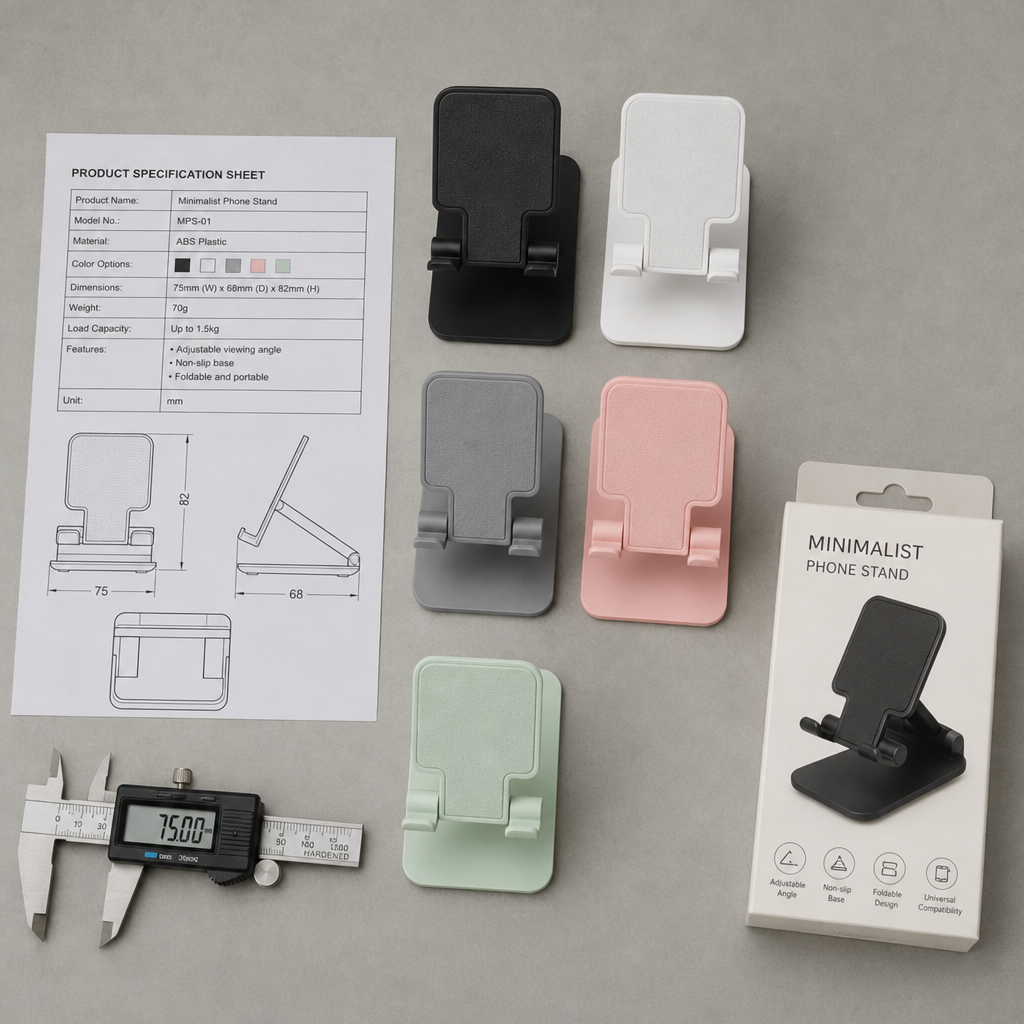
Retain an approved reference sample and identify its specification revision. Keep a matching reference available to the supplier and inspector. Ask whether the sample uses the intended production materials and process; if anything changes later, require written approval and consider whether further testing is needed.
Your sample approval should state exactly what it covers. Appearance approval alone should not silently become approval of durability, safety, or final packaging.
Confirm product compliance before paying a production deposit
Determine which US requirements apply to the exact product, intended users, materials, and claims. CBP notes that importers must satisfy applicable requirements administered by other agencies, which may include the CPSC, FDA, FCC-related authorities, or others depending on the product. Obtain product-specific professional guidance where needed.
For CPSC-regulated products, distinguish children's products from general-use products. Children's products subject to applicable safety rules generally require testing by a CPSC-accepted third-party laboratory; regulated general-use products may require a General Certificate of Conformity supported by appropriate testing. Do not assume a supplier's generic certificate covers your exact item.
Include these checks in your compliance file:
- Match reports to the model, materials, manufacturer, and applicable requirements.
- Confirm who issues required certificates and maintains supporting records.
- Review required warnings, instructions, identification, and labeling.
- Establish whether changes require renewed assessment or testing.
For 2027 planning, account for CPSC certificate eFiling. Its published schedule specifies July 8, 2026, for covered general imports and January 8, 2027, for covered products entered from Foreign Trade Zones. Confirm applicability and filing responsibilities with your broker before shipment.
How do you calculate landed costs before ordering?
Calculate landed costs by adding the costs required to purchase the goods and deliver them to your chosen receiving point, then dividing by the expected sellable units. Define that receiving point explicitly so supplier quotes remain comparable. Assess Amazon selling costs separately to avoid confusing landed cost with overall profitability.
Build a worksheet containing:
|
Cost group |
Items to investigate |
|---|---|
|
Product |
Unit price, tooling, customization, accessories |
|
Preparation |
Packaging, labels, testing, inspection |
|
Transportation |
Origin handling, freight, insurance, destination delivery |
|
Import |
Applicable duties, tariffs, brokerage, entry-related fees |
|
Exceptions |
Rework, storage, damage, delays, extra handling |
CBP explains that import charges can include duties, other taxes, and user fees, depending on the goods and transportation method. Have a qualified broker assess classification and applicable charges for your shipment instead of applying a blanket percentage to all imports from China.
Run base and downside scenarios. Include advertising, returns, fulfillment, and storage in a separate profitability model using current account-specific estimates. Reject an order that only works when every assumption is optimistic.
Put production terms and QC into the purchase agreement
Turn the approved specification into a purchase-order attachment. Identify the product revision, quantities, packaging artwork, agreed milestones, inspection access, payment stages, and the process for handling defects. Ask appropriate advisers to review contractual terms when the commitment warrants it.
Define QC—quality control—before production starts. Give your inspector measurable checks, relevant test methods, defect examples, and acceptance criteria. Discuss whether the inspection should use an agreed sampling plan, and document what passing that inspection does and does not establish.
Your inspection instructions should cover:
- Product identity, materials, dimensions, finish, and functionality.
- Accessories, instructions, variant quantities, and carton contents.
- Packaging protection, artwork, label accuracy, and barcode readability.
- Photographic evidence and the procedure for reporting failures.
Schedule inspection while correction is still possible. If the shipment fails, require a documented corrective-action plan and decide whether reinspection is necessary before authorizing release.
Keep inspection records alongside the purchase documents. Do not treat a favorable inspection report as a replacement for applicable safety testing or certification.
Design packaging for protection and receiving
Treat packaging as part of the product specification, not a decoration added after manufacturing. Review the complete packed unit, including inserts, accessories, protective materials, labels, and instructions. Measure and weigh the final configuration before approving logistics estimates.
Amazon's FBA guidance requires appropriate preparation, packaging, and identification before inventory reaches fulfillment centers. It also warns that inadequate or noncompliant packaging can result in refusal, return, or repackaging at the seller's expense. Check the current requirements for your exact product and shipment.
Ask the supplier to provide photographs of the finished retail unit and master carton. Verify that bundles stay together, fragile components are protected, and labels remain readable after preparation. Test barcode scanning on actual printed labels rather than approving artwork alone.
Approve any packaging change in writing. A different carton or insert should trigger a fresh review of protection, dimensions, labeling, and cost assumptions.
Assign logistics responsibilities before cargo leaves
When sourcing from China, request comparable freight proposals using the same cargo dimensions, weight, collection point, destination, and service scope. Require providers to identify what is included, excluded, and payable separately. Clarify ambiguous service descriptions such as “BA logistics” rather than assuming they mean FBA delivery or a particular provider.
Name the party responsible for each handoff:
- Supplier collection and export arrangements.
- International transport and cargo insurance arrangements.
- Customs entry and required supporting information.
- Destination handling, appointments, and final delivery.
- Exceptions, claims, and storage decisions.
Identify the importer of record and customs broker explicitly. CBP states that using a broker does not remove the importer of record's responsibility for accurate entry documentation and applicable duties, taxes, and fees.
Before dispatch, reconcile the commercial invoice, packing list, shipment quantities, and receiving instructions. Ask your broker and freight provider to confirm shipment-specific requirements and deadlines rather than relying on a supplier's promise that shipping is “all included.”
Complete listing preparation before launch
Build the listing from the approved production specification and representative finished goods. Confirm the product identity, variation details, dimensions, materials, included components, and care instructions. Amazon's listing guidance emphasizes accurate product information and notes that required attributes and safety information vary by product.
Use this final readiness check:
- Photography shows the actual product and included accessories.
- Copy matches the approved specifications and packaging.
- Claims have supporting evidence where needed.
- Required listing and compliance information is ready for submission.
- Received inventory matches the approved product and quantity records.
Check current category-specific image and content requirements before publishing; Amazon requires product images to meet its standards and applicable category guidelines.
For your amazon seller strategies, make the first order a controlled learning exercise. Track defects, customer questions, returns, and actual delivery expenses, then use those records to revise the next purchase rather than repeating assumptions.
Make every purchase gate count
A useful checklist turns China product sourcing into documented decisions, not a race to the lowest quote. Confirm what you are buying, who is supplying it, how compliance will be demonstrated, and what delivery will really cost. If one critical answer remains unresolved, pause the order; resolving it before production is the purpose of the process.
Frequently Asked Questions About China Product Sourcing Checklist for Amazon Sellers
What is the importance of supplier verification in product sourcing from China?
Supplier verification ensures that you are dealing with legitimate businesses, which helps mitigate risks such as fraud, product authenticity issues, and quality concerns. It's crucial for maintaining compliance and protecting your brand reputation on platforms like Amazon.
What are the key elements of a comprehensive China product sourcing checklist?
A comprehensive checklist should include commercial viability, supplier verification, product specifications, samples, product compliance, landed costs, quality control, packaging, logistics, and listing readiness. Each stage should have clear approval conditions to prevent unresolved issues from moving into production.
How can I ensure product compliance when importing goods from China?
Product compliance can be ensured by determining the applicable regulations and standards (e.g., CPSC for consumer products), obtaining necessary certifications, and conducting thorough product testing. It’s important to maintain accurate documentation for compliance verification.
What are the potential landed costs associated with importing goods from China?
Landed costs include the purchase price, shipping, import duties, taxes, and any additional fees related to transportation and logistics. Calculating these accurately is essential for determining the total cost of goods sold and ensuring profitability.
What should I include in my Amazon product listing preparation?
Your Amazon product listing should include accurate product information, photographs of the actual product, details about included accessories, and compliance information. Ensuring that all details match the approved specifications and meet Amazon's requirements is vital for a successful launch.