To buy direct from China, we need to identify suitable suppliers, verify their capabilities, approve samples, agree on written specifications, calculate landed costs, and inspect the goods before shipment.
A low factory quotation becomes a profitable purchase only when the products arrive in the correct quantity, meet our quality requirements, and can legally enter our destination market.
For importers, distributors, retailers, and ecommerce businesses, buying from China can provide access to extensive product ranges, customization options, and scalable manufacturing.
The challenge is choosing a purchasing process that matches our order size, technical requirements, and ability to manage production.
This guide explains how we can source products from China, compare purchasing channels, evaluate manufacturers, control payments, and organize international delivery.
What Does Buying Direct From China Mean?
Buying direct from China means purchasing goods from a China-based supplier rather than obtaining them through a distributor in our home market. That supplier may be a manufacturer, trading company, wholesaler, or online retailer.
Buying directly from a Chinese supplier does not automatically mean buying directly from a factory.
A manufacturer produces goods, although it may outsource certain processes. A trading company purchases from manufacturers and resells to buyers. A wholesaler typically offers existing products, sometimes with smaller order quantities and mixed product selections.
We should establish which business model we are dealing with before comparing prices.
| Supplier type | Suitable purchasing needs | Main consideration |
|---|---|---|
| Manufacturer | Repeat orders, technical specifications, custom products | Production capability and minimum order requirements |
| Trading company | Multiple product categories and coordinated purchasing | Transparency about factories, pricing, and responsibilities |
| Wholesaler | Existing designs, mixed products, smaller quantities | Stock availability and consistency between batches |
| Retail marketplace seller | Samples, individual purchases, early product evaluation | Limited customization and potentially higher unit costs |
| Sourcing partner | Supplier research, local coordination, consolidated orders | Clear service scope, fees, and supplier relationships |
The strongest supplier is the one that can deliver our required product consistently at an acceptable total cost.
Where Can We Buy Products Direct From China?
Our sourcing channel should reflect the product, purchase volume, and amount of customization required.
Online B2B Marketplaces
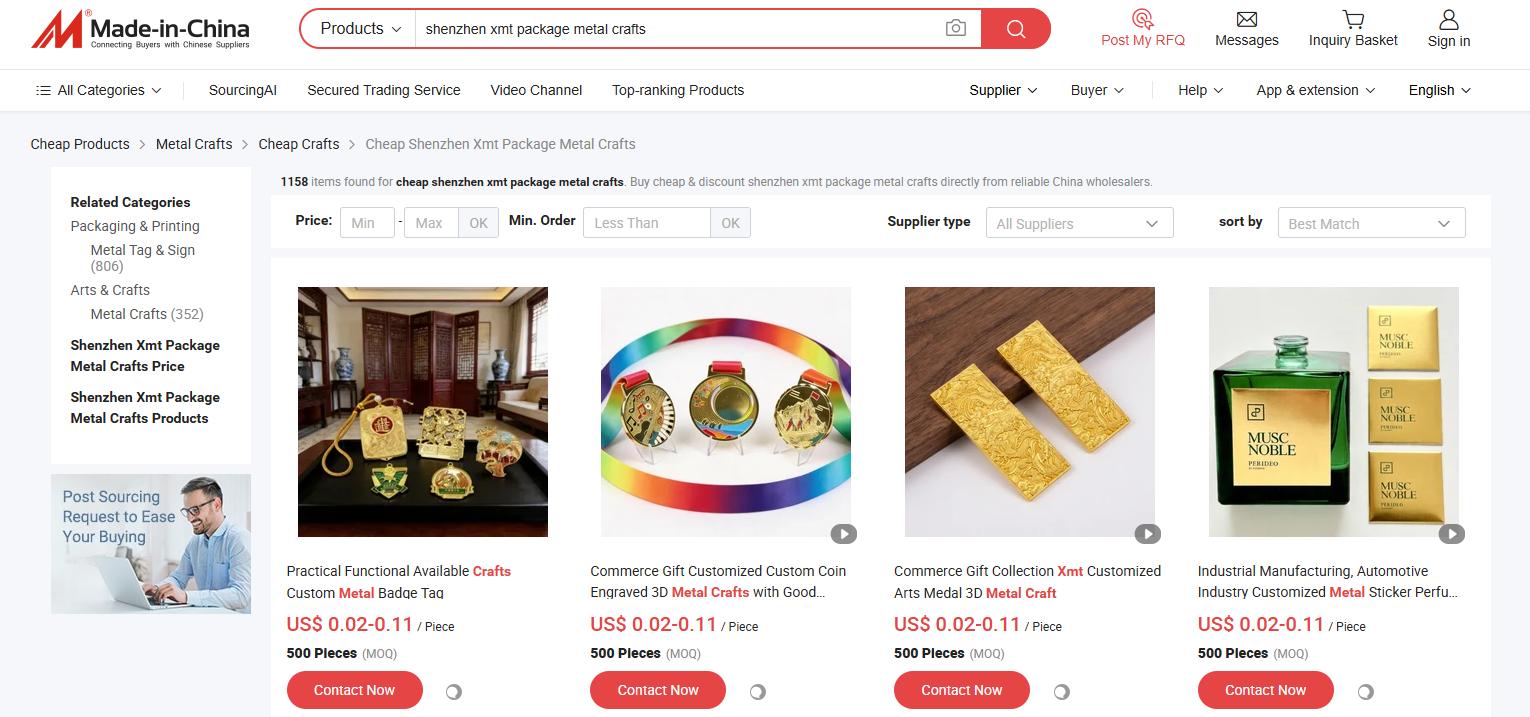
B2B marketplaces provide a practical starting point for finding suppliers and collecting quotations. We can use them to identify product variations, understand manufacturing options, and create an initial supplier shortlist.
Platforms to investigate include Alibaba.com, Made-in-China.com, and Global Sources.
However, a supplier profile is only an introduction. We still need to verify the company, confirm manufacturing arrangements, and evaluate samples. Before relying on a platform’s payment or dispute protection, we should read its current terms and ensure our transaction meets the eligibility requirements.
China Domestic Wholesale Platforms
Domestic platforms such as 1688 can help us research Chinese products and suppliers. Before ordering, we should establish whether the seller can support our export transaction.
Questions include:
- Can the supplier communicate our specifications accurately?
- Can it provide export-ready packaging and documentation?
- Does it have experience with our destination market?
- Who will organize domestic collection and international shipping?
- Can payment be made through an agreed, documented business channel?
A domestic quotation may exclude services included in an export quotation.
We should compare equivalent purchasing scopes before concluding that one channel is cheaper.
Chinese Wholesale Markets
Wholesale markets can be useful when we need to inspect many existing products and assemble a mixed assortment.
For example, buyers researching small consumer goods may investigate Yiwu, while furniture buyers may research Foshan. These locations can help narrow a search, but we should verify each supplier individually.
When buying from market booths, we should ask whether the seller owns a factory, represents manufacturers, or distributes stock. We should also confirm whether future orders will come from the same production source.
Trade Fairs and Factory Visits
Trade fairs allow us to examine samples and discuss requirements with multiple suppliers in a concentrated period. Factory visits help us investigate production processes, machinery, quality controls, and capacity.
Neither activity replaces verification. A polished booth or showroom does not establish that a supplier can manufacture our particular product at the required quality.
Before visiting, we should prepare our specifications, target quantities, technical questions, and supplier assessment criteria.
How to Buy Direct From China: Step by Step
1. Define the Product Before Requesting Prices
A vague inquiry produces quotations that are difficult to compare.
If we ask five suppliers for “a high-quality backpack,” each may quote different materials, dimensions, construction methods, and packaging. The cheapest offer may simply describe a different product.
We should prepare a product specification sheet covering the details that affect performance, appearance, and cost.
| Specification | Information to provide |
|---|---|
| Product description | Intended use, model, and reference images |
| Materials | Material type, grade, thickness, or composition |
| Dimensions | Measurements and acceptable tolerances |
| Performance | Load capacity, operating requirements, or durability targets |
| Appearance | Color references, surface finish, and workmanship |
| Branding | Logo artwork, placement, size, and application method |
| Packaging | Individual packaging, carton requirements, and shipping marks |
| Compliance | Destination market and applicable requirements |
| Quantity | Initial order and expected repeat quantities |
| Quality criteria | Defect definitions and inspection requirements |
For a simple stock product, this document may be short. For an engineered or customized product, drawings, component specifications, and testing procedures may be necessary.
2. Check Market Requirements Before Committing to Production
We should investigate destination-market requirements before paying a production deposit. Otherwise, we may approve a product that needs expensive changes before it can be sold.
The review should address product safety, labeling, restricted materials, electrical characteristics, packaging obligations, and any category-specific documentation.
For example, in the United States, children’s products subject to applicable children’s product safety rules generally require certification supported by testing from a CPSC-accepted third-party laboratory, subject to relevant exceptions. A generic supplier certificate does not establish compliance for every product or market.
We should ask a qualified laboratory or compliance specialist to identify the requirements for our exact product, intended use, and sales destination.
3. Build a Supplier Shortlist
We can begin with a manageable group of potential suppliers and reduce it as evidence becomes available.
Our initial questions should establish:
- The supplier’s legal business identity.
- Whether it manufactures the product or purchases it elsewhere.
- Which production processes it performs internally.
- Whether it has made comparable products.
- Whether it can meet our quantity and delivery requirements.
- Whether it accepts independent inspection.
- Whether it can provide relevant technical records.
A supplier that asks detailed questions about materials, tolerances, packaging, and intended use may be helping us identify problems before production.
4. Verify the Chinese Supplier
Supplier verification should connect the company we contact, the company that signs the agreement, the production location, and the business receiving payment.
We should request the supplier’s registered Chinese company name, business license information, Unified Social Credit Code, factory address, and bank beneficiary details. Where appropriate, we can arrange an independent business check or factory audit.
Confirm Production Capability
A factory audit should investigate capabilities relevant to our order:
- Machinery and production processes.
- In-house and outsourced operations.
- Capacity constraints.
- Quality control procedures.
- Material traceability.
- Storage and packing conditions.
- Experience with similar specifications.
A general audit can help establish that a business operates, but our product may require a more technical assessment.
Review Test Reports Carefully
We should check whether a report identifies the correct model, materials, manufacturer, and applicable standards. We should also investigate whether design or component changes affect its relevance.
A report for a similar-looking product should not be treated as proof for our order.
5. Request Comparable Quotations
Every shortlisted supplier should receive the same request for quotation.
We should request:
- Prices at our intended quantities.
- Minimum order quantity by model, color, and packaging.
- Sample charges.
- Tooling and setup costs.
- Production lead time.
- Packaging specifications.
- Carton dimensions and gross weight.
- Payment terms.
- Quotation validity.
- A named delivery term and location.
A quotation without a clear delivery basis leaves part of the purchasing cost unknown.
Example RFQ
Please quote 1,000 and 3,000 units according to the attached specification sheet. Confirm materials, dimensions, logo method, packaging, MOQ per color, sample cost, tooling charges, production lead time, carton measurements, gross weight, payment terms, and quotation validity. Please identify the delivery term, named location, and Incoterms version. Confirm whether independent pre-shipment inspection is accepted.
6. Order and Evaluate Samples
Samples help us assess whether the supplier understands our requirements. They also reveal issues that product photographs cannot establish reliably.
Our evaluation should cover:
- Materials and construction.
- Dimensions and fit.
- Surface finish and color.
- Function and durability.
- Logo accuracy.
- Packaging protection.
- Relevant safety or performance tests.
For customized goods, we should distinguish between a standard sample, a development sample, and the final pre-production sample.
Once approved, we should record the sample’s identity and retain a reference copy. Written specifications should remain authoritative wherever the sample leaves room for interpretation.
Sample approval should be a documented decision, with any remaining changes clearly identified.
7. Calculate the Total Landed Cost
The factory price is only one part of our purchasing cost.
A useful planning calculation is:
Total landed cost = goods + packaging and tooling + origin charges + freight + insurance
+ import charges + destination handling + delivery + quality and service costs
We must avoid counting the same cost twice when it is already included in a quotation.
Illustrative Landed Cost Example
The following figures are hypothetical and do not represent current freight or tariff quotations.
| Cost item | Amount |
|---|---|
| 1,000 products at $4.20 each | $4,200 |
| Custom packaging | $300 |
| Origin transport and handling | $250 |
| International freight and insurance | $850 |
| Assumed import duties and taxes | $600 |
| Destination clearance and delivery | $400 |
| Inspection | $200 |
| Total | $6,800 |
| Cost per ordered unit | $6.80 |
If only 980 units are saleable, the cost becomes approximately $6.94 per saleable unit.
This distinction helps us evaluate the financial effect of defects, damage, and shortages.
We should then add selling expenses—such as fulfillment, marketplace fees, advertising, returns, and overhead—before estimating profit.
8. Negotiate the Complete Order
Negotiation should address the complete purchasing arrangement.
We can investigate whether costs improve through:
- Standard materials or components.
- Fewer color variations.
- Existing tooling.
- More efficient packaging.
- Realistic production scheduling.
- Consolidated purchasing.
- Repeat orders based on demonstrated demand.
We should request approval before any change that affects materials, construction, performance, or packaging.
A lower price creates little value if it increases defects, freight costs, or customer returns.
9. Document the Purchase Agreement
The order documents should identify exactly what the supplier must deliver and how we will assess it.
Depending on the transaction, these may include a purchase order, signed specification sheet, manufacturing agreement, approved artwork, and inspection plan.
Key subjects include:
- Buyer and supplier legal identities.
- Product models and specification revisions.
- Quantity and pricing.
- Approved materials and components.
- Substitution and subcontracting approval.
- Packaging and labeling.
- Production milestones.
- Inspection and acceptance procedures.
- Remedies for nonconforming goods.
- Payment milestones.
- Delivery terms.
- Tooling ownership.
- Dispute procedures.
Incoterms allocate specified delivery responsibilities, costs, and risks, but they do not settle payment timing, ownership transfer, or all remedies for defective or delayed goods. Those matters need separate agreement. trade.gov
10. Arrange Payment With Clear Release Conditions
We should choose a payment arrangement that matches the supplier relationship, order value, and transaction risk.
Possible arrangements include bank transfers, eligible platform payment services, and documentary instruments for suitable transactions. Availability, costs, protection, and recovery options differ.
Rather than treating any deposit percentage as universally appropriate, we should negotiate:
- What triggers the initial payment.
- Which production milestones must be demonstrated.
- When inspection occurs.
- What documents are required.
- What happens if inspection fails.
- When the balance becomes payable.
The quoted currency also requires agreement. We should compare the actual amount payable, exchange conversion costs, transfer fees, and beneficiary requirements.
Verify Bank Detail Changes Independently
If payment instructions change, we should confirm the request through a previously verified contact channel.
A familiar email thread alone is insufficient evidence that new beneficiary details are legitimate. Any difference between the contracting company and the payment recipient should be explained and documented before funds are released.
11. Monitor Production and Inspect Before Shipment
The appropriate inspection plan depends on product complexity, supplier history, and the consequences of failure.
| Inspection stage | Purpose |
|---|---|
| Pre-production review | Check materials, approved samples, and production readiness |
| During-production inspection | Identify problems while correction remains practical |
| Pre-shipment inspection | Evaluate finished goods against agreed requirements |
| Loading supervision | Check quantities, cargo condition, and loading arrangements |
Inspection criteria should be agreed before production. We should define critical, major, and minor defects, identify required functional checks, and establish what happens when a shipment fails.
A sampling inspection provides evidence about the inspected shipment within the limits of its method. It does not guarantee that every unit is defect-free or replace required laboratory testing.
Shipping From China: Choosing the Right Method
Shipping decisions should account for cargo size, weight, urgency, value, handling requirements, and destination charges.
| Shipping method | Suitable situations | Cost and planning considerations |
|---|---|---|
| Express courier | Samples and urgent small shipments | Chargeable weight, service coverage, and clearance charges |
| Air freight | Time-sensitive commercial goods | Airport handling, customs clearance, and final delivery |
| Sea freight, LCL | Cargo sharing a container with other shipments | Consolidation, handling, minimum charges, and destination fees |
| Sea freight, FCL | Orders that justify a dedicated container | Container utilization, inland transport, and delivery arrangements |
| Rail or multimodal | Routes where these services are available | Terminal access, transfers, restrictions, and schedule reliability |
We should compare door-to-door scope, even when individual quotations cover only part of the journey.
A low freight rate may exclude origin handling, destination terminal costs, clearance, storage, or delivery appointments.
Understand the Delivery Term
The quotation should identify both the rule and the named location—for example, FCA [named location], Incoterms® 2020.
FCA can apply across transport modes, while FOB and CIF are rules for sea and inland waterway transport. We should select a rule that fits the actual handover arrangement.
For any delivered quotation, we should ask who handles customs entry, which charges are included, and who provides the import records. A promise of “door-to-door delivery” needs a written scope.
Calculate the Full Purchasing Timeline
The replenishment timeline includes more than manufacturing and transit:
Supplier selection + sampling + revisions + material procurement + production + inspection + corrections + transport + clearance + warehouse receiving
We should establish milestone dates and identify which stages can overlap. For seasonal products, our plan should work backward from the required warehouse arrival date.
Customs and Import Requirements When Buying From China
Before shipment, we should confirm the requirements for the exact product and destination.
The review should cover:
- Tariff classification.
- Country of origin.
- Customs valuation.
- Applicable duties and additional trade measures.
- Importer identity.
- Permits or agency requirements.
- Product labeling.
- Required shipping and compliance documents.
We should not assume an old duty rate or low-value exemption remains applicable. A shipment-specific check with the destination customs authority or customs broker is necessary before finalizing the landed-cost budget.
Prepare Consistent Shipping Documents
Depending on the shipment, documentation may include:
- Commercial invoice.
- Packing list.
- Bill of lading or air waybill.
- Origin documentation where required.
- Test reports or product certificates.
- Insurance documents.
- Product-specific permits or declarations.
Descriptions, quantities, values, weights, and company details should be consistent across the records.
We should never accept a proposal to understate value or misdescribe goods to reduce import charges.
Buying From a Factory vs. Using a Sourcing Partner
Direct factory purchasing suits businesses that can manage technical communication, supplier assessment, production follow-up, inspection, and logistics.
A sourcing partner may be useful when our order involves several suppliers, mixed product categories, local coordination, or consolidated shipping.
| Purchasing situation | Approach to consider |
|---|---|
| One established product with substantial repeat demand | Direct manufacturer relationship |
| Several unrelated categories | Trading company or sourcing partner |
| Small mixed assortment | Wholesaler or consolidation arrangement |
| Custom product with technical requirements | Manufacturer supported by specialist assessment |
| Limited local purchasing resources | Sourcing partner with defined responsibilities |
Before appointing a partner, we should establish the fee model, supplier relationships, reporting obligations, payment flow, inspection responsibilities, and remedies.
Intermediary involvement should earn its cost through measurable work, coordination, or risk reduction.
Common Mistakes When Buying Direct From China
Selecting on Unit Price Alone
We should compare equivalent specifications and complete landed costs. A lower quotation can conceal thinner materials, weaker packaging, omitted accessories, or fewer services.
Assuming Supplier Labels Replace Verification
Marketplace status, certificates, photographs, and customer references can contribute evidence. None should replace checking the supplier’s suitability for our particular order.
Approving Quality Through Messages Alone
Phrases such as “premium quality” and “same as sample” leave room for disagreement. Measurable specifications and documented acceptance criteria make problems easier to prevent and resolve.
Ignoring Packaging Until Production Ends
Packaging affects damage rates, shipping volume, labeling, and warehouse handling. We should approve it alongside the product.
Increasing Order Size Before Validating Demand
A larger order may reduce unit cost while increasing inventory exposure. Our first commercial order should test both the supplier and the market.
Treating Every Repeat Order as Identical
Materials, components, production sites, and packaging can change. We should control revisions and require approval for changes that affect the agreed product.
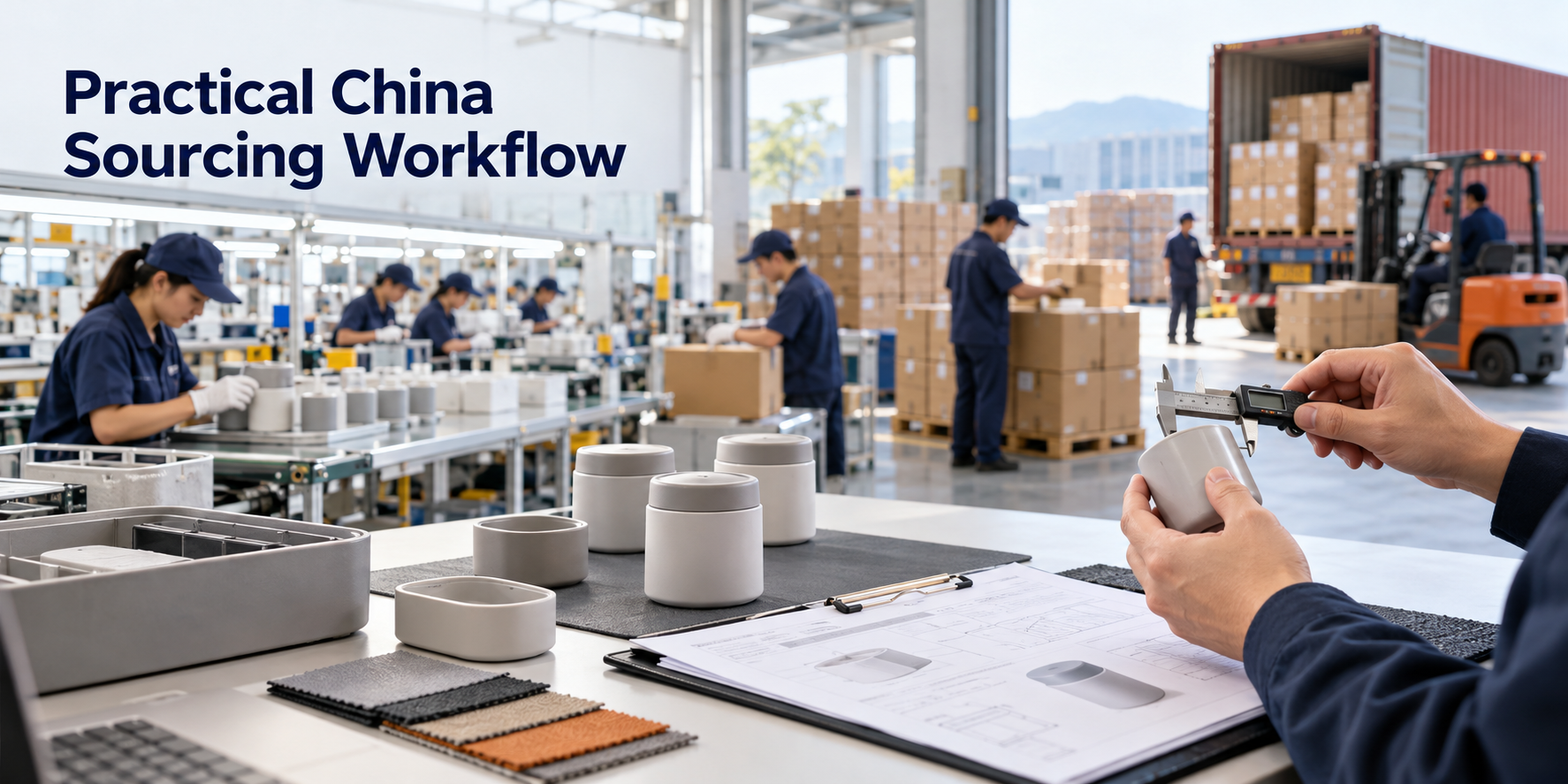
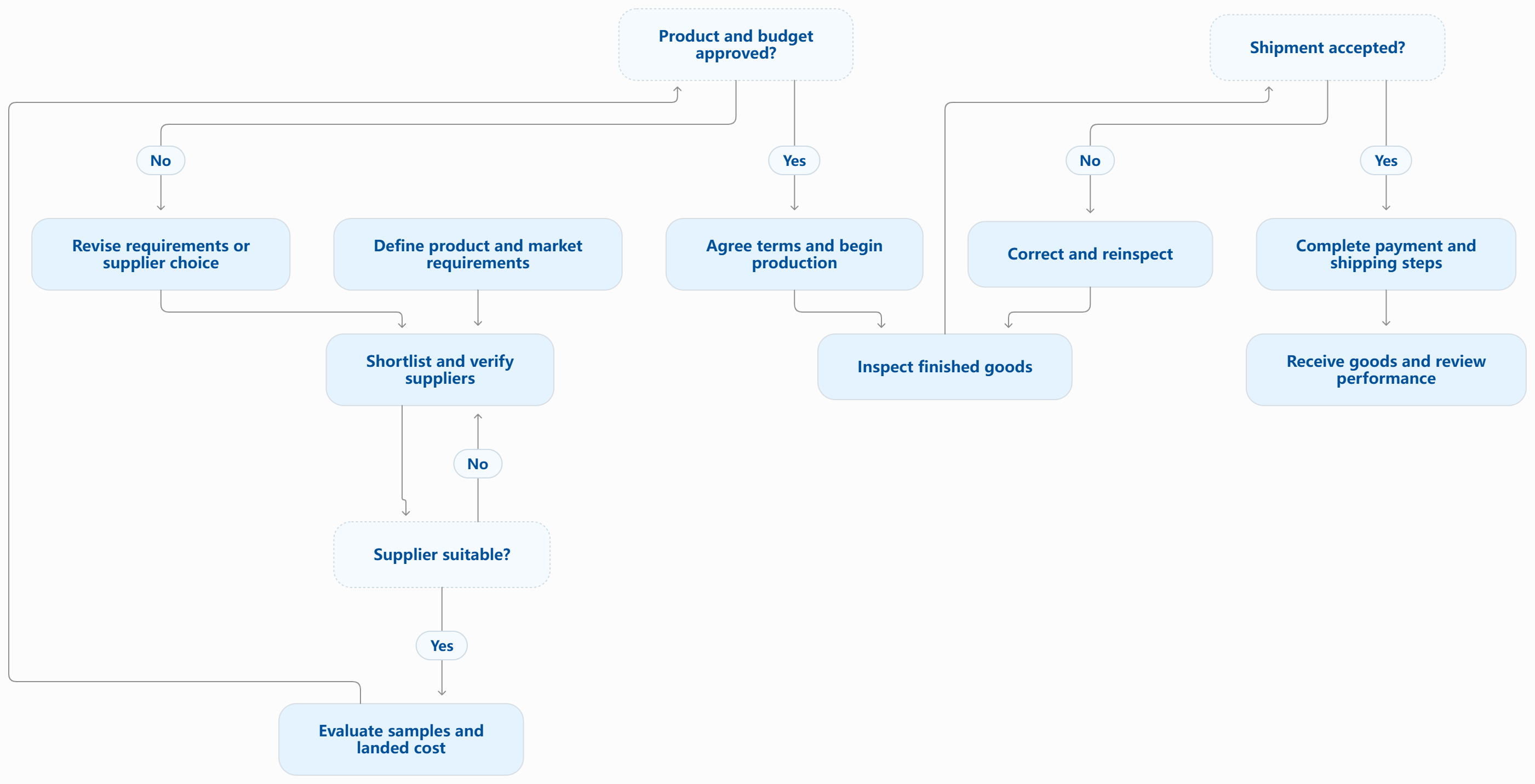
A Practical China Sourcing Workflow
Checklist Before Placing a China Wholesale Order
Before committing funds, we should be able to confirm each of the following:
- The supplier’s identity and production arrangements are verified.
- The destination-market requirements have been reviewed.
- The product specifications and samples are approved.
- Quotations have been compared on equivalent terms.
- The landed-cost budget includes destination charges.
- The agreement defines quality, delivery, and payment obligations.
- The beneficiary details have been checked.
- Inspection arrangements are confirmed.
- The shipment documents and import responsibilities are assigned.
- The order quantity fits our demand and available cash.
Any unresolved item should become a specific action before the relevant payment or production milestone.
Frequently Asked Questions About Buying Direct From China

Can We Buy Directly From a Factory in China?
Yes, when a manufacturer accepts our quantity, specifications, and commercial terms. We should verify that it makes the product itself and can support the required quality, documentation, and export arrangements.
Is Buying Direct From China Always Cheaper?
No. It can reduce the purchase price, but freight, import charges, inspection, defects, financing, and inventory costs affect the final result. We should compare the cost per saleable unit against alternative supply options.
Can We Buy From China Without Visiting?
Yes. Remote sourcing can use business verification, samples, live factory reviews, independent audits, laboratory testing, and shipment inspections. The evidence required should reflect the order’s complexity and value.
What Is the Minimum Order Quantity?
There is no universal MOQ. It depends on materials, production setup, customization, packaging, and the supplier’s operating model. We should ask for the MOQ per model, color, and packaging variation.
Can We Buy Small Quantities Direct From China?
Yes, depending on the supplier. Existing stock, standard packaging, and fewer variations may make smaller purchases more practical. We should check whether the freight and handling costs still support the intended margin.
How Do We Know Whether a Supplier Is a Factory?
We should investigate its registration details, production address, machinery, processes, staffing, and outsourcing arrangements. A product-specific factory assessment provides stronger evidence than a supplier’s description alone.
What Is the Safest Way to Pay a Chinese Supplier?
No method removes every risk. We should combine verified beneficiary details, written specifications, appropriate payment milestones, and documented inspection conditions. Where transaction protection is available, we should check its current scope and requirements before paying.
How Long Does Buying From China Take?
The complete timeline depends on sourcing, sampling, production, inspection, shipping, and clearance. We should obtain a milestone schedule for our order and include time for revisions or corrective work.
Do We Need a Sourcing Agent?
A sourcing agent is optional. The decision depends on our product knowledge, available staff, supplier count, and ability to manage local purchasing tasks. We should compare the service fee with the work and coordination it provides.
What Should We Do When the Goods Arrive?
We should record shipment condition, count the goods, inspect for damage or discrepancies, and retain supporting photographs and documents. We should notify the responsible parties promptly under the applicable contract and transport terms, then use the findings to improve the next order.