


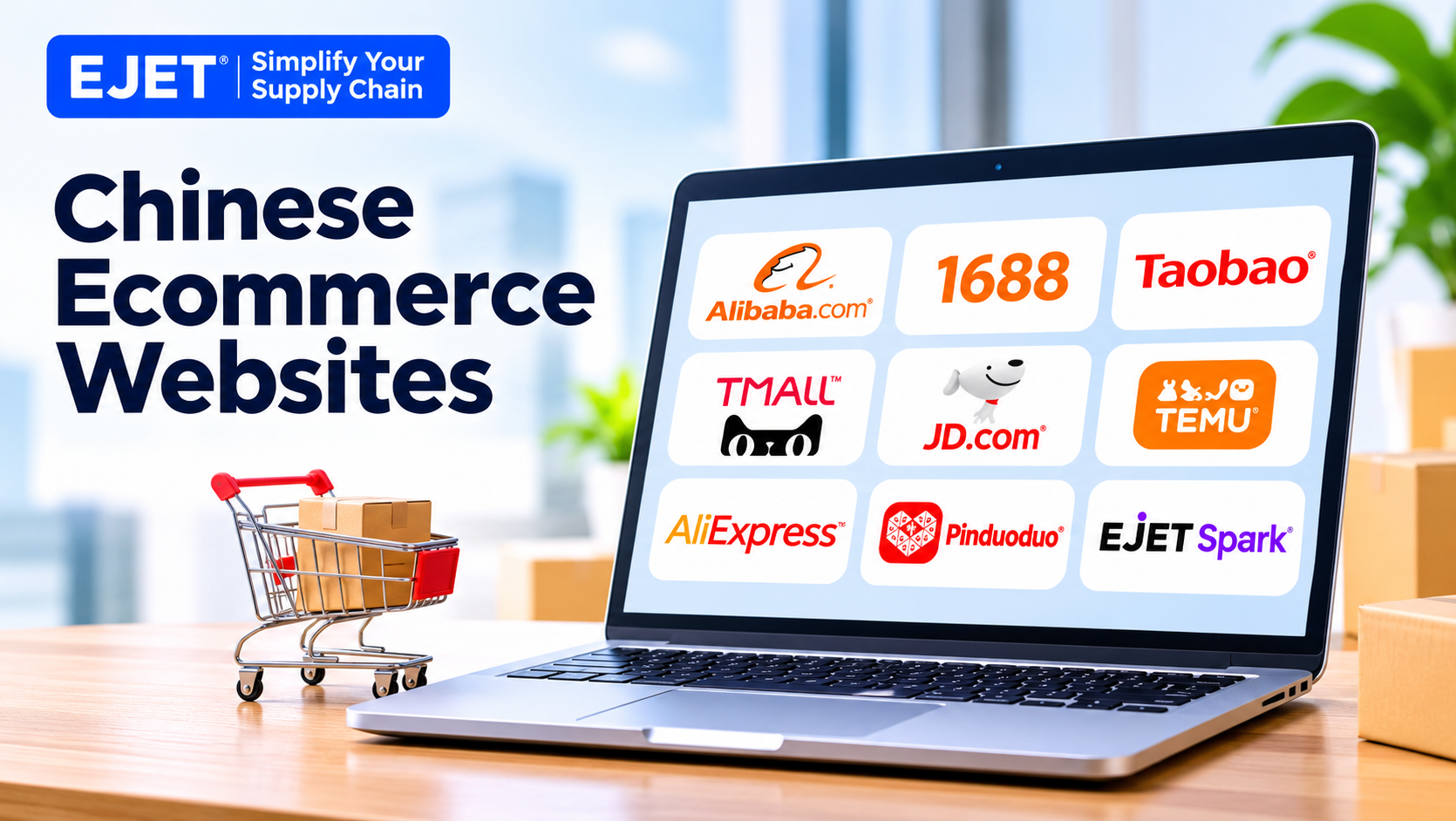
Chinese ecommerce websites serve different purposes: AliExpress and Temu cater to international consumers, Taobao and JD.com offer a window into domestic retail, and Alibaba.com focuses on business sourcing.
Understanding those differences helps you choose where to browse, buy individual items or investigate wholesale suppliers.
This article compares eight platforms and explains the checks to make before placing an order.
The useful starting point is not simply the lowest advertised price. Decide whether you need one product or a production run, where it must be delivered, and how much support you need if something goes wrong.
Which Chinese e-commerce websites suit your shopping needs?
For international personal shopping, start by comparing AliExpress and Temu. For exploring Chinese shopping websites aimed primarily at the domestic market, consider Taobao, Ejetspark, JD.com and Pinduoduo. Business buyers should distinguish Alibaba.com’s international sourcing model from 1688’s domestic wholesale focus rather than treating both as ordinary online shops.
Use this shortlist as a starting point, not a ranking of quality or guaranteed value:
|
Your main aim |
Platforms to explore |
First thing to check |
|---|---|---|
|
Buy individual items internationally |
AliExpress, Temu |
Delivery availability for your address |
|
Browse China-focused retail |
Taobao, Pinduoduo |
Account, payment and delivery arrangements |
|
Explore branded wholesale |
Quantity requirements and export arrangements |
|
|
Source products for a business |
Alibaba.com |
Specifications, samples and order protection |
|
Investigate domestic wholesale |
1688 |
Quantity requirements and export arrangements |
These categories reflect each platform’s general positioning; they do not replace checking a particular listing. The distinction between domestic retail, international retail and wholesale is fundamental to navigating e-commerce in China. (downloads.regulations.gov)
Eight platforms worth exploring
AliExpress: international consumer shopping
AliExpress is an international retail marketplace within Alibaba’s ecosystem. Unlike a wholesale sourcing platform, it is oriented towards consumer purchases from participating sellers. It is a sensible starting point when you want to investigate Chinese online shopping without beginning with supplier quotations or a manufacturing brief.
Compare the exact variation you intend to buy, not just the photograph or headline price. For example, establish whether an accessory listing includes the complete set shown or only one component. Read the applicable transaction terms and seller’s offer before paying; AliExpress publishes region-specific terms, so do not assume advice written for another country applies to your order.
Temu: value-focused marketplace browsing
Temu is operated by PDD Holdings, which also operates Pinduoduo. Its international marketplace focuses on offering merchandise at attractive prices, with merchants listing products for consumers to browse and order. It belongs on a comparison shortlist, but it should not be confused with a factory-sourcing service.
Approach a basket with a clear shopping list. Check dimensions, materials, quantities and intended use rather than judging value from the discount presentation alone. Before ordering, locate the shipping and returns information for your market and confirm the process through Temu’s support channels. Knowing where to request help is more useful than assuming every purchase will be straightforward.
Taobao: broad retail discovery
Taobao is Alibaba’s consumer marketplace and a useful place to explore China-focused online retail. Its extensive catalogue makes it relevant for product discovery as well as purchase research. Browse it to understand the options available, then investigate whether a specific item and seller suit your requirements.
For overseas buyers, make account access, payment and delivery part of the initial investigation. Do not spend hours assembling a basket before establishing how you would receive it. Keep a note of the seller, chosen variation and measurements for shortlisted products; that creates a clearer basis for comparison than saving attractive photographs without the associated details.
EJET Spark: Creative Products and Wholesale Sourcing
EJET Spark is a China-based platform focused on creative products, original IP collections, trendy gifts, toys, and lifestyle accessories. It is an excellent option for retailers, brands, and wholesale buyers looking for unique, market-driven products that stand out from traditional marketplace offerings.
EJET Spark is particularly worth exploring when your goal is to discover innovative product designs, emerging trends, and distinctive collections for your business. Buyers should review product details, customization options, and minimum order quantities before submitting an inquiry.
JD.com: retail with a supply-chain focus
JD.com combines online retail with a third-party marketplace, supported by its wider supply-chain and logistics operations. Its retail business includes electronics, home appliances and general merchandise. That makes it useful to explore when comparing China-focused retail offers, particularly where precise product specifications matter.
First establish who is selling the item and what the offer includes. For an electrical product, ask about the model, voltage, plug, software language and warranty arrangements relevant to your locati0n. Treat an unresolved compatibility question as a reason to pause, not a detail to sort out after delivery. A familiar product photograph is not enough to confirm the specification you need.
Alibaba.com: international business sourcing
Alibaba.com is an international wholesale marketplace, so approach it with a purchasing brief rather than only a shopping basket. It is relevant when you need to discuss quantities, specifications, samples or production requirements with suppliers. Alibaba’s buyer guidance recommends detailed purchase orders and requesting samples before committing to a full order.
Ask suppliers to quote against the same specification so you can compare offers meaningfully. Record materials, dimensions, packaging, agreed quality requirements and shipping dates in the order. For eligible Trade Assurance purchases, protection depends on the online order and payment through Alibaba.com; it is not a substitute for defining what the supplier must deliver.
1688: domestic wholesale exploration
1688 is Alibaba’s domestic wholesale platform, connecting buyers with suppliers in China. Its role differs from Alibaba.com’s international wholesale positioning. Explore it when researching supply options, but do not interpret a domestic wholesale listing as a ready-made international purchasing arrangement.
Before comparing a quotation, ask what quantity it covers and which services are included. Establish who would arrange domestic transport, export handling and onward delivery, and whether you need outside assistance. If considering a sourcing agent, request a written explanation of fees, inspection responsibilities and the refund process. Compare the complete arrangement, not an apparently attractive unit price in isolation.
Pinduoduo: domestic value-led commerce
Pinduoduo is PDD Holdings’ China-focused platform, built around value-for-money merchandise and interactive shopping. It is relevant both to shoppers investigating the domestic market and to readers trying to understand how a Chinese marketplace can combine product discovery with engagement. Temu and Pinduoduo share a parent company but have different geographical coverage.
Treat it as a separate service rather than assuming your experience with Temu will transfer directly. Before planning a purchase, investigate the requirements for account access, payment and receiving goods. If your aim is market research rather than buying, note how products and offers are presented without assuming the displayed deal would be available to you overseas.
Can overseas shoppers order from every platform?
No: international-facing platforms and China-focused services have different purposes, so you should not assume every website offers a workable route to your address. AliExpress serves international consumers, while platforms such as 1688 are positioned around domestic trade. Confirm the arrangements for the specific product before committing money.
Separate three questions: can you access the service, can you pay, and can the goods reach you? A successful account registration does not answer the other two. Ask for clarification whenever checkout or the seller’s explanation leaves a gap.
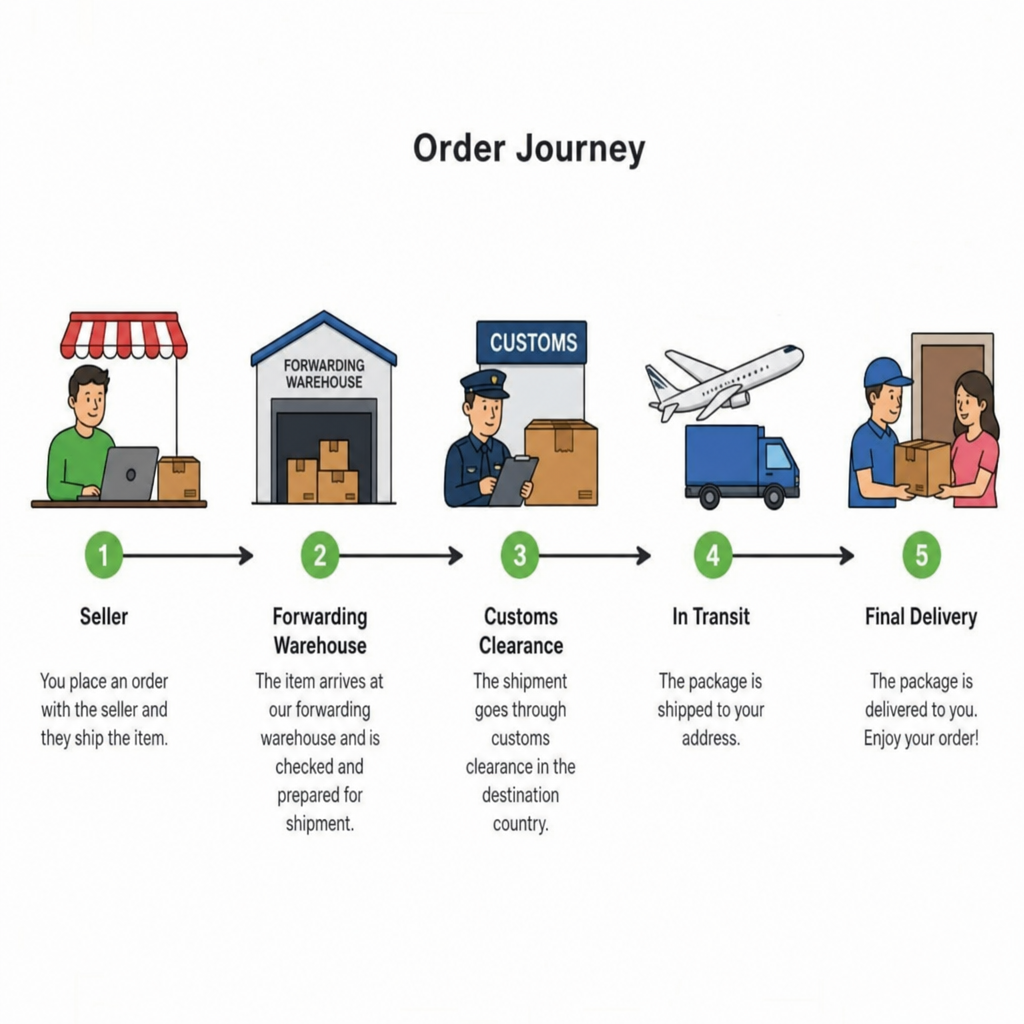
If considering a forwarding service, request details of parcel acceptance, consolidation, prohibited items, insurance and returns. Establish which company handles a problem at each stage. For US deliveries, check current Customs and Border Protection guidance: overseas purchases are imports, and product admissibility and customs requirements matter independently of the website’s willingness to sell.
How should you assess a seller before buying?
Assess the specific offer by checking seller identity, product details, written commitments and the available dispute process. Platform membership is not a substitute for understanding the transaction. Alibaba’s sourcing guidance, for example, recommends samples, detailed purchase orders and keeping communication within its messaging system.
Use these checks to turn a promising listing into a considered decision:
- Confirm the exact product. Request measurements, materials, model numbers and included components. Resolve contradictions between photographs and descriptions before paying.
- Read reviews for relevant detail. Look for comments addressing the variation and use case you care about, rather than relying only on an overall score.
- Test the seller’s communication. Ask a specific question. An answer that avoids the specification you requested should prompt further investigation.
- Keep an evidence trail. Save the listing, selected variation, order confirmation and important messages. For Alibaba.com Trade Assurance, the online order and communication records form the basis of refund resolution.
- Start cautiously. Consider a modest first purchase or request a sample for a business order. Use it to assess whether the product meets your brief before making a larger commitment.
Compare the complete cost before checkout
When comparing China online stores, build your own cost checklist rather than letting a headline price make the decision. Include the product, shipping, any intermediary services and potential import charges. US customs guidance warns that shipping and handling charges do not necessarily cover duties or clearance costs.
For online shopping from China, record these points beside each shortlisted offer:
- The delivered total: what is included now, and what could be payable later?
- The delivery commitment: is the stated date dispatch, estimated arrival or something else?
- The return route: where would you send the item, and who pays?
- The practical fit: have you confirmed size, compatibility and intended use?
- The support route: which seller, platform or intermediary would handle a problem?
For business purchases, add sample costs, inspection arrangements, packaging and the agreed shipping scope to your comparison. Ask every supplier to address the same brief. That helps you avoid comparing a basic product quotation with another offer that includes additional work or services. Alibaba’s buyer guidance specifically recommends detailed purchase orders and inspection options.
Choose for the purchase, not the promotion
The most useful website is the one whose purchasing model matches your needs. Separate international shopping from domestic retail and wholesale sourcing, then investigate the particular seller and delivery route.
Explore a shortlist, resolve unanswered questions and compare complete offers before paying. That approach gives you a stronger basis for choosing than a familiar platform name or an eye-catching discount.
Frequently Asked Questions About Chinese E-commerce Websites
What are the best Chinese e-commerce websites for international buyers?
The best platforms for international buyers include AliExpress and Temu, which cater specifically to consumers outside of China.
Can I shop on Taobao if I'm not in China?
While Taobao primarily serves the domestic market, international buyers can access it. However, they need to ensure they can navigate account access, payment, and delivery arrangements.
What should I consider when ordering from Chinese online shopping sites?
Always check delivery availability to your address, understand the seller's identity, review product specifications carefully, and confirm after-sales terms and conditions.
Is Alibaba suitable for individual consumers?
Alibaba.com is primarily a wholesale marketplace and is better suited for businesses looking to source large quantities.
(Note: The text in the provided section requires no changes, as the phrasing and vocabulary are applicable in both American and British English without any American-specific terms or spellings.) Individual consumers may find platforms like AliExpress more user-friendly.
How can I ensure a safe purchase from a Chinese e-commerce website?
Verify the seller's credentials, read product reviews, confirm shipping and return policies, and keep a record of communication and transaction details to protect yourself in case of disputes.