









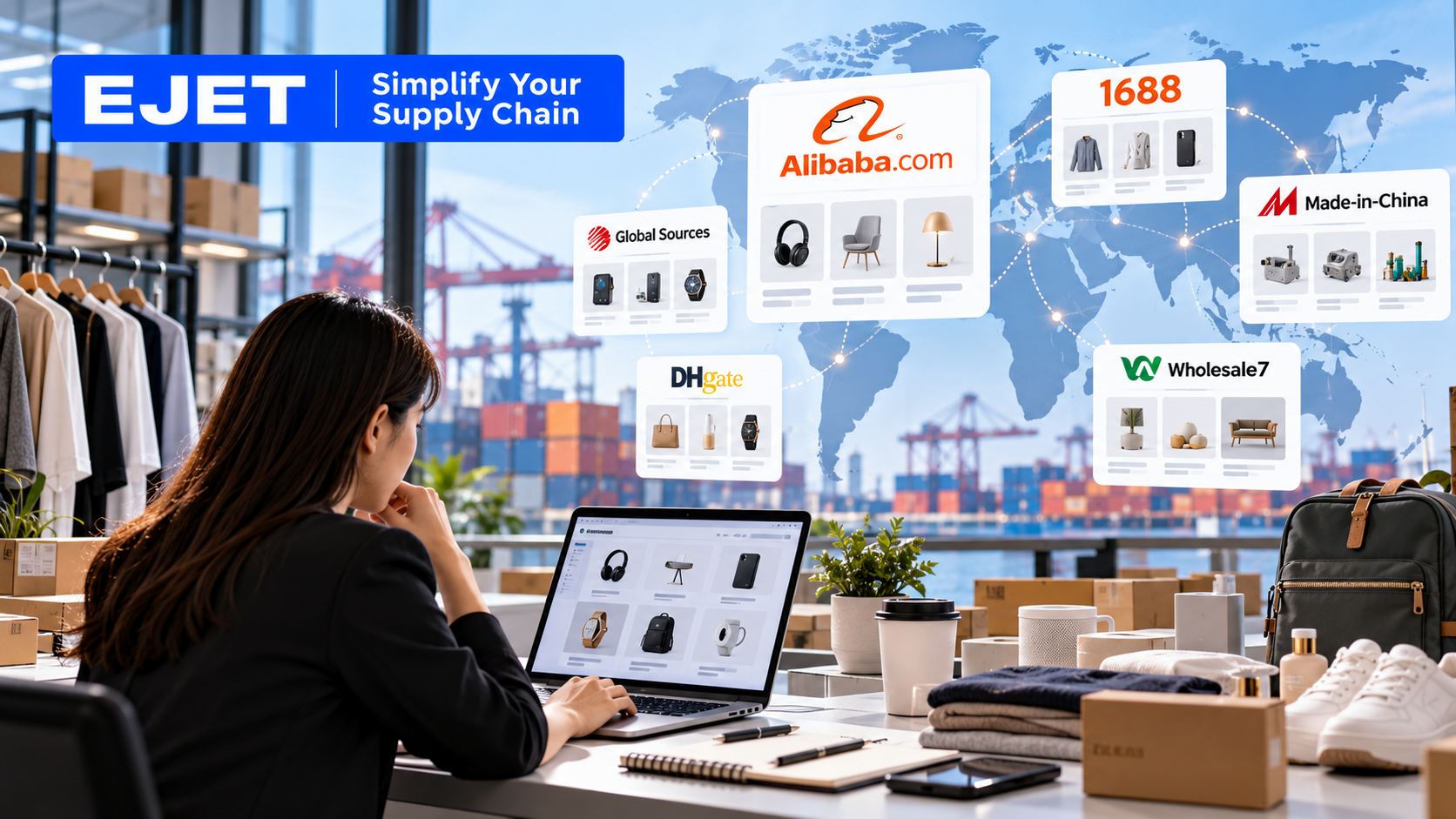
Finding reliable Alibaba alternatives for product sourcing in 2026 is essential for businesses seeking competitive wholesale prices, dependable manufacturers, lower minimum order quantities (MOQs), and diversified supply chains.
Although Alibaba.com remains one of the world's most recognized B2B marketplaces, it is not always the ideal solution for every business.
Importers, Amazon FBA sellers, dropshippers, private-label brands, and established retailers increasingly explore alternative sourcing platforms to discover specialized suppliers, negotiate better manufacturing terms, and reduce dependence on a single marketplace.
In this comprehensive guide, we examine the 15 best Alibaba alternatives in 2026, compare their advantages and limitations, and explain how to select trustworthy suppliers for international product sourcing.
Best Alibaba Alternatives in 2026: Quick Comparison
|
Platform |
Best For |
Primary Market |
MOQ Flexibility |
|---|---|---|---|
|
Global Sources |
Verified supplier discovery and electronics |
Asia |
Medium |
|
Made-in-China.com |
Factory-direct manufacturing |
China |
Medium |
|
1688.com |
Competitive domestic wholesale pricing |
China |
Varies |
|
DHgate |
Small wholesale orders |
China |
Often low |
|
IndiaMART |
Indian manufacturers and wholesalers |
India |
Varies |
|
TradeIndia |
Industrial and consumer products |
India |
Varies |
|
Thomasnet |
Industrial sourcing |
United States |
Varies |
|
Faire |
Boutique and retail inventory |
Multiple markets |
Often low |
|
HKTDC Sourcing |
International trade connections |
Hong Kong and Asia |
Varies |
|
EC21 |
International supplier discovery |
Global |
Varies |
|
ECPlaza |
Korean and international suppliers |
South Korea and global |
Varies |
|
Kompass |
Industrial supplier research |
Global |
Negotiated |
|
Europages |
European manufacturers |
Europe |
Varies |
|
CJdropshipping |
Dropshipping fulfillment |
Global |
Often low |
|
EJETSPARK |
Product Sourcing & Wholesale Library |
Global |
Varies |
MOQ terms depend on the individual supplier, product, customization requirements, and order volume. Platform descriptions are general guidance rather than guarantees of current supplier availability or pricing.
1. Global Sources: Best Alibaba Alternative for Electronics and Established Suppliers
Website: globalsources.com
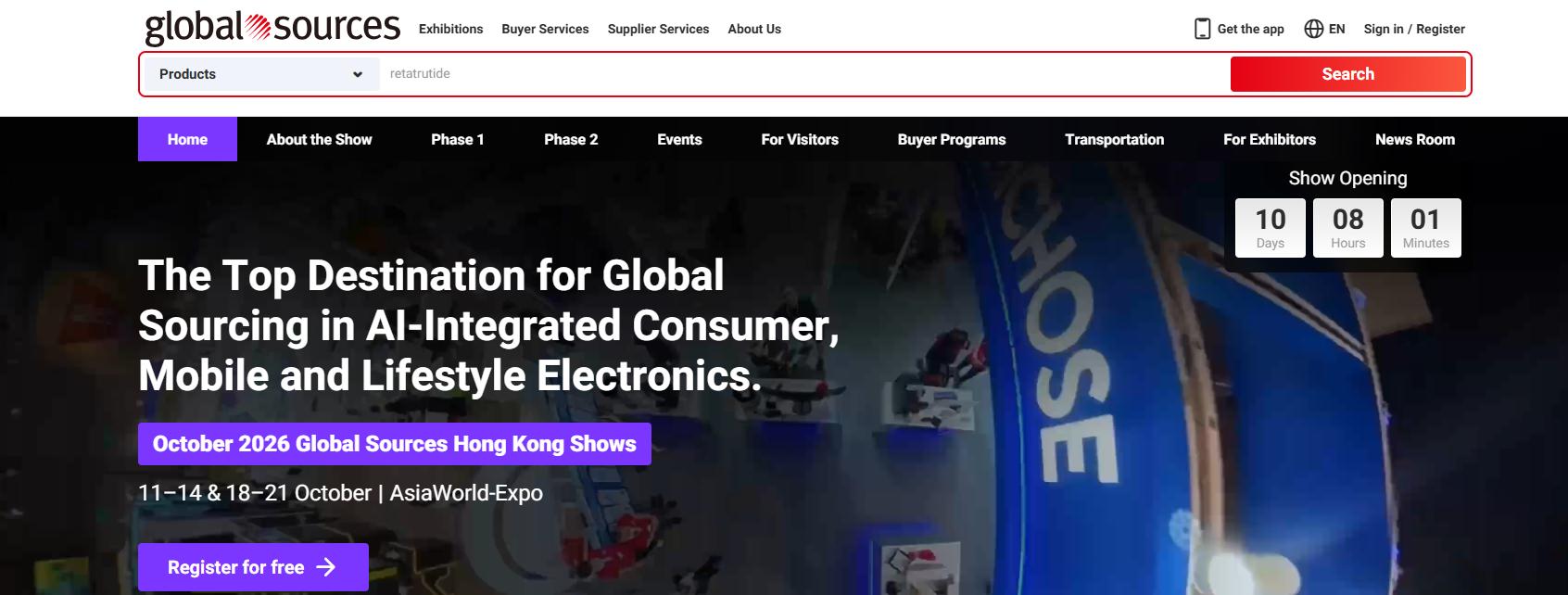
Global Sources is a leading alternative to Alibaba for businesses sourcing consumer electronics, mobile accessories, smart-home devices, fashion accessories, and lifestyle products.
The platform combines online supplier discovery with industry exhibitions, making it particularly attractive to buyers who prefer meeting potential manufacturers and examining products before committing to large orders.
Key advantages
- Supplier discovery tools and sourcing events.
- Strong representation in consumer electronics and accessories.
- Opportunities to establish direct manufacturer relationships.
- Useful sourcing information for international importers.
- Access to suppliers offering OEM and ODM manufacturing.
Potential drawbacks: MOQs can be higher than those offered by small-order marketplaces, and supplier verification still requires independent checks.
Our recommendation: Global Sources is particularly suitable for established ecommerce brands and importers seeking long-term manufacturing partnerships.
2. Made-in-China.com: Best for Factory-Direct Product Manufacturing
Website: made-in-china.com
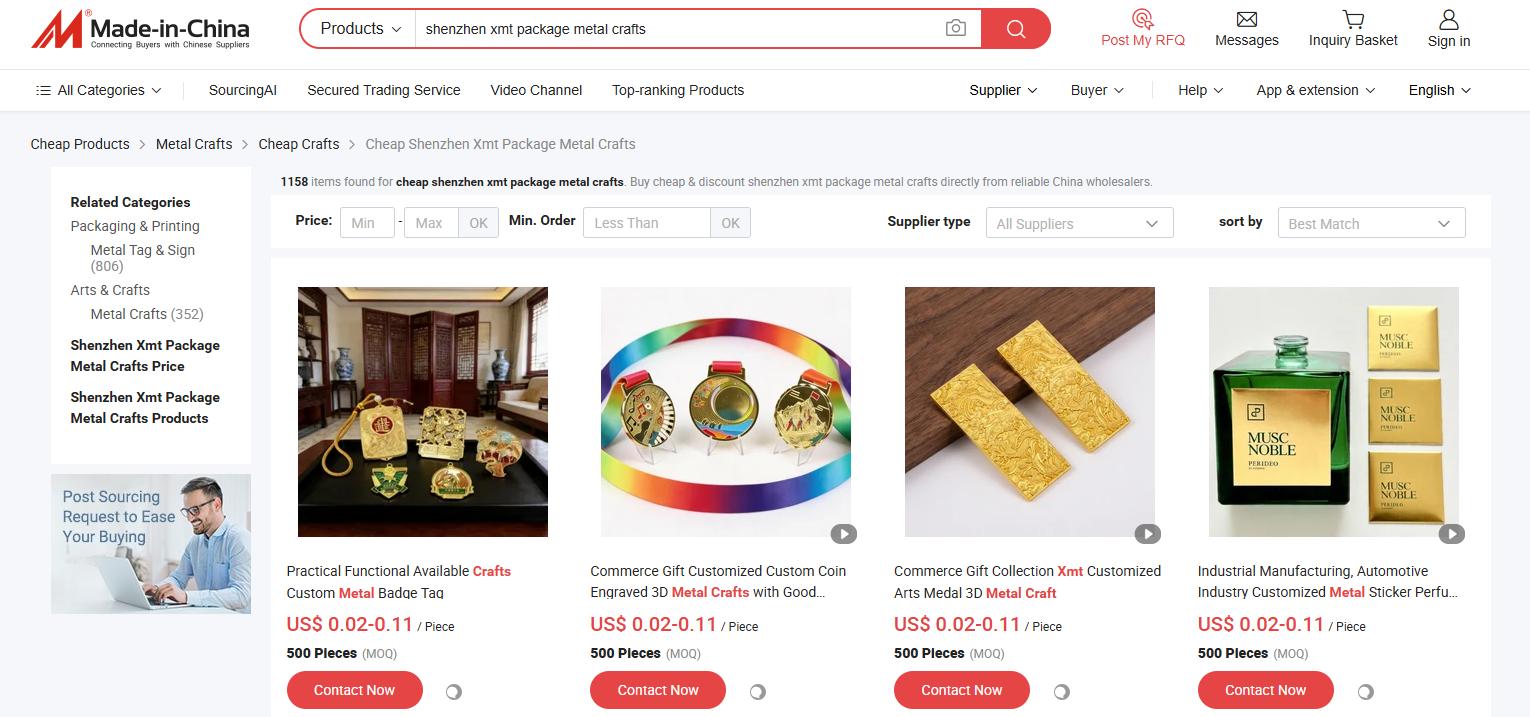
Made-in-China.com is one of the strongest Alibaba competitors for manufacturing and wholesale sourcing.
Its extensive supplier listings cover industrial equipment, machinery, automotive components, construction materials, consumer electronics, packaging, and everyday consumer products.
A distinguishing feature is its emphasis on manufacturer discovery and supplier assessment services.
Why businesses choose Made-in-China.com
The platform is particularly useful when we need custom-manufactured products rather than ready-to-ship wholesale inventory.
Buyers can request quotations, compare manufacturing capabilities, review supplier profiles, and investigate available audit information.
For private-label projects, we recommend requesting detailed quotations that specify:
Product materials and technical specifications.
Tooling and mold development costs.
MOQ requirements.
Prototype and sample fees.
Production lead times.
Packaging customization.
Quality-control procedures.
Shipping terms and payment milestones.
Best for: OEM manufacturing, industrial procurement, customized products, and factory-direct sourcing.
3. 1688.com: Best for Competitive China Wholesale Prices
Website: 1688.com
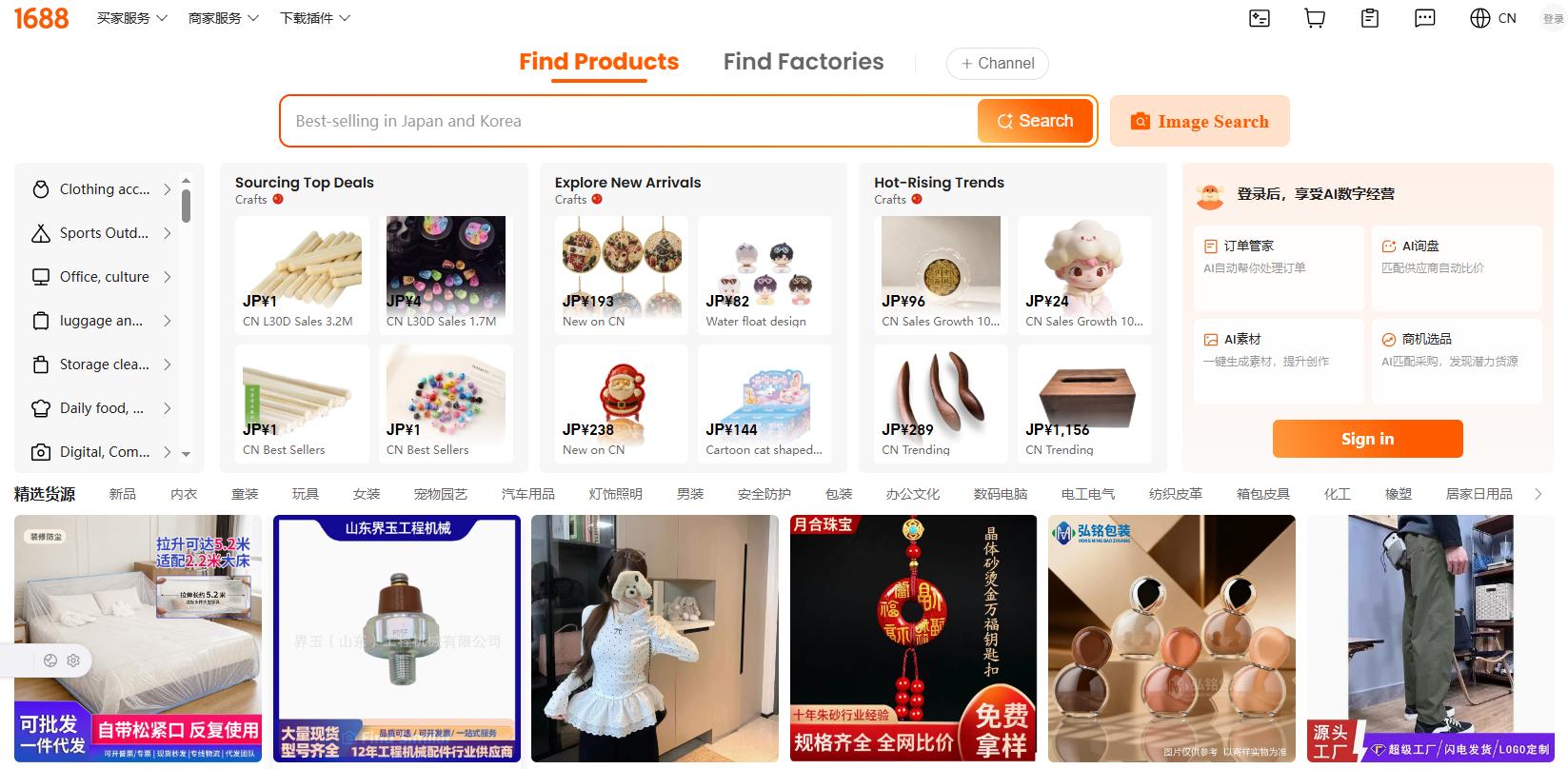
1688.com is a Chinese domestic wholesale marketplace operated within Alibaba Group's ecosystem.
Although it is related to Alibaba, its domestic-market orientation makes it a distinct sourcing channel.
Products listed on 1688 may be priced competitively because many sellers primarily serve Chinese businesses rather than international importers.
However, lower advertised prices do not automatically mean lower landed costs.
International buyers may encounter Chinese-language listings, domestic payment requirements, limited international shipping arrangements, and communication barriers.
How to source from 1688
We recommend using a structured purchasing process:
Identify suitable products and compare multiple suppliers.
Translate product specifications carefully.
Confirm MOQ, packaging, and customization options.
Arrange samples through the supplier or a sourcing agent.
Verify product quality before purchasing inventory.
Calculate domestic freight, consolidation, international shipping, duties, and taxes.
A reliable China sourcing agent can assist with supplier communication, factory coordination, inspection, and shipment consolidation.
Best for: Experienced importers, purchasing agents, and ecommerce sellers seeking competitive Chinese domestic wholesale offers.
4. DHgate: Best Alibaba Alternative for Small Wholesale Orders
Website: dhgate.com
DHgate is a cross-border ecommerce marketplace that connects international buyers with sellers offering wholesale and small-quantity products.
Unlike traditional factory-focused sourcing platforms, DHgate is often more accessible to businesses testing products before placing substantial inventory orders.
Its categories include consumer electronics, fashion accessories, home products, beauty accessories, and general merchandise.
Main benefits
Lower entry barriers: Some sellers accept single-unit purchases or small orders.
Product testing: Businesses can evaluate customer demand before committing significant capital.
Accessible ordering: Buyers can compare listings and place orders through an ecommerce-style interface.
Supplier variety: Multiple sellers may offer similar products at different price points.
However, product quality and seller reliability vary. Buyers should carefully review product specifications, seller histories, shipping terms, and applicable buyer protections.
We also recommend avoiding listings that appear to involve unauthorized branded merchandise or counterfeit goods.
Best for: Small retailers, new ecommerce entrepreneurs, and businesses testing wholesale products.
5. IndiaMART: Best Alibaba Alternative for Indian Suppliers
Website: indiamart.com
IndiaMART is a major B2B marketplace connecting buyers with Indian manufacturers, exporters, wholesalers, and service providers.
It is especially relevant for businesses diversifying procurement beyond China.
Popular sourcing categories include textiles, garments, industrial machinery, packaging materials, agricultural products, chemicals, and home furnishings.
Why source products from India?
India offers established manufacturing capabilities in several industries, particularly textiles, apparel, leather goods, handicrafts, pharmaceuticals, and engineering products.
For businesses developing home-decor brands or private-label clothing collections, Indian suppliers can provide valuable alternatives.
Nevertheless, manufacturing capacity, quality systems, lead times, and export experience vary considerably between suppliers.
We recommend confirming that the selected manufacturer has experience shipping to the destination market and can provide the required documentation.
Best for: Textile sourcing, home furnishings, apparel, handicrafts, and India-based manufacturing partnerships.
6. TradeIndia: Best for Indian Wholesale and Industrial Products
Website: tradeindia.com
TradeIndia is another established Indian B2B platform featuring manufacturers, exporters, and wholesalers across multiple industries.
Its product categories include machinery, electrical equipment, chemicals, building materials, textiles, and consumer goods.
The platform provides another channel for discovering suppliers beyond those listed on IndiaMART.
For industrial procurement, comparing suppliers across both directories can help identify manufacturers with suitable production capabilities.
Best for: Industrial products, wholesale procurement, and supplier diversification within India.
7. Thomasnet: Best for US Manufacturers and Industrial Sourcing
Website: thomasnet.com
Thomasnet is an industrial supplier discovery platform focused on North American manufacturers and service providers.
It differs substantially from Alibaba because its primary strength lies in industrial sourcing rather than general consumer wholesale merchandise.
Businesses use Thomasnet to research suppliers offering CNC machining, metal fabrication, injection molding, packaging, electronics manufacturing, and specialized components.
Advantages of sourcing through Thomasnet
Regional manufacturing: Buyers can identify domestic or nearby production partners.
Technical specialization: Listings help businesses locate suppliers offering specific manufacturing processes.
Supply-chain coordination: Domestic sourcing may simplify communication, site visits, and certain logistics arrangements.
Customization opportunities: Industrial manufacturers may support prototype development and contract manufacturing.
US manufacturing is not necessarily cheaper than importing. However, total procurement costs can become more competitive when we consider transportation, inventory holding, quality failures, and replenishment speed.
Best for: US businesses sourcing custom components, industrial equipment, and contract manufacturing services.
8. Faire: Best Alibaba Alternative for Boutique Wholesale Products
Website: faire.com
Faire is a wholesale marketplace designed primarily for independent retailers and brands.
It is especially useful for boutique stores seeking finished products rather than factory-direct private-label manufacturing.
Retailers can discover categories such as home decor, stationery, gifts, beauty, accessories, food, and lifestyle products.
Why Faire stands out
Faire emphasizes brand discovery and wholesale purchasing for retail resale.
Depending on the retailer's location, eligibility, and current platform terms, participating businesses may have access to flexible purchasing arrangements, payment terms, or return programs.
These benefits should always be verified before ordering.
Faire is generally less suitable for businesses that want exclusive ownership of product designs or large-scale custom manufacturing.
Best for: Independent retailers, gift shops, lifestyle boutiques, and curated online stores.
9. HKTDC Sourcing: Best for International Trade Connections
Website: sourcing.hktdc.com
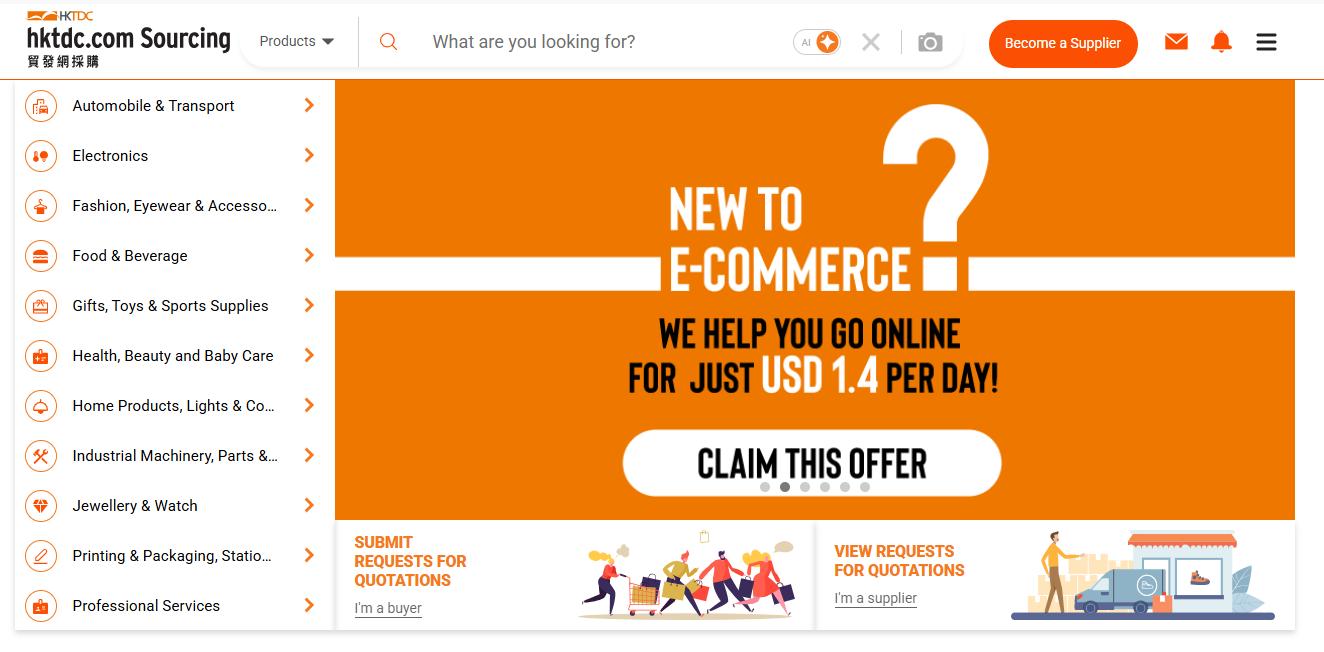
HKTDC Sourcing is associated with the Hong Kong Trade Development Council and provides access to supplier and product information.
Its connections with international trade exhibitions make it valuable for businesses seeking manufacturing relationships across Asia.
Common categories include electronics, gifts, home products, fashion accessories, lighting, and consumer goods.
We recommend HKTDC Sourcing for importers who value trade-fair participation and direct supplier engagement.
Best for: Asian supplier discovery, trade exhibitions, and international sourcing relationships.
10. EC21: Best for Global B2B Supplier Discovery
Website: ec21.com
EC21 is an international B2B marketplace featuring suppliers and buyers across numerous countries.
It can help businesses identify alternative manufacturers in markets beyond China.
Product categories include machinery, electronics, chemicals, agricultural products, and consumer merchandise.
Because supplier profiles vary in completeness, we recommend treating the platform as a discovery channel and conducting independent due diligence before making payments.
Best for: Global supplier research and sourcing diversification.
11. ECPlaza: Best for Korean and International Wholesale Suppliers
Website: ecplaza.net
ECPlaza is a B2B marketplace with roots in South Korea and international supplier listings.
Businesses can explore categories such as beauty products, industrial goods, electronics, and consumer merchandise.
It can be useful for identifying Korean suppliers, particularly when researching products associated with Korean manufacturing and export industries.
Buyers should confirm product origin rather than assuming that every seller or product listed is Korean.
Best for: Korean supplier discovery and international B2B trade research.
12. Kompass: Best for International Industrial Supplier Research
Website: kompass.com
Kompass is a global business information and company discovery platform.
Unlike transactional wholesale marketplaces, Kompass is particularly useful for identifying companies by industry, manufacturing activity, and geographic market.
We can use it to research potential manufacturing partners, build supplier shortlists, and explore alternative procurement regions.
Best for: Industrial supplier research, B2B prospecting, and international manufacturer identification.
13. Europages: Best Alibaba Alternative for European Manufacturers
Website: europages.com
Europages is a European-focused B2B supplier discovery platform connecting buyers with manufacturers, distributors, and service providers.
It is especially useful for businesses seeking European manufacturing capabilities.
Relevant categories include industrial machinery, packaging, textiles, cosmetics, food processing, and specialized manufacturing.
Benefits of European sourcing
European suppliers may offer advantages for buyers prioritizing regional production, shorter supply routes, specialized engineering, or particular manufacturing standards.
However, European sourcing does not automatically guarantee regulatory compliance.
We still need to confirm that the finished product meets applicable requirements in its destination market.
Best for: European supplier discovery, specialized manufacturing, and regional supply-chain diversification.
14. CJdropshipping: Best for Dropshipping and Order Fulfillment
Website: cjdropshipping.com
CJdropshipping combines product sourcing with ecommerce fulfillment services.
Rather than focusing exclusively on bulk wholesale purchases, it supports businesses that want to sell products without holding substantial inventory.
Services may include product sourcing, order processing, warehousing, packaging, and shipping.
Who should use CJdropshipping?
CJdropshipping can be appropriate for ecommerce businesses seeking fulfillment support and access to product catalogs.
However, we recommend evaluating actual shipping times, stock reliability, integration compatibility, refund policies, and product consistency.
Dropshipping eliminates some inventory commitments but does not eliminate customer service responsibilities or product compliance obligations.
Best for: Dropshipping businesses and ecommerce merchants outsourcing order fulfillment.
15. EJETSpark
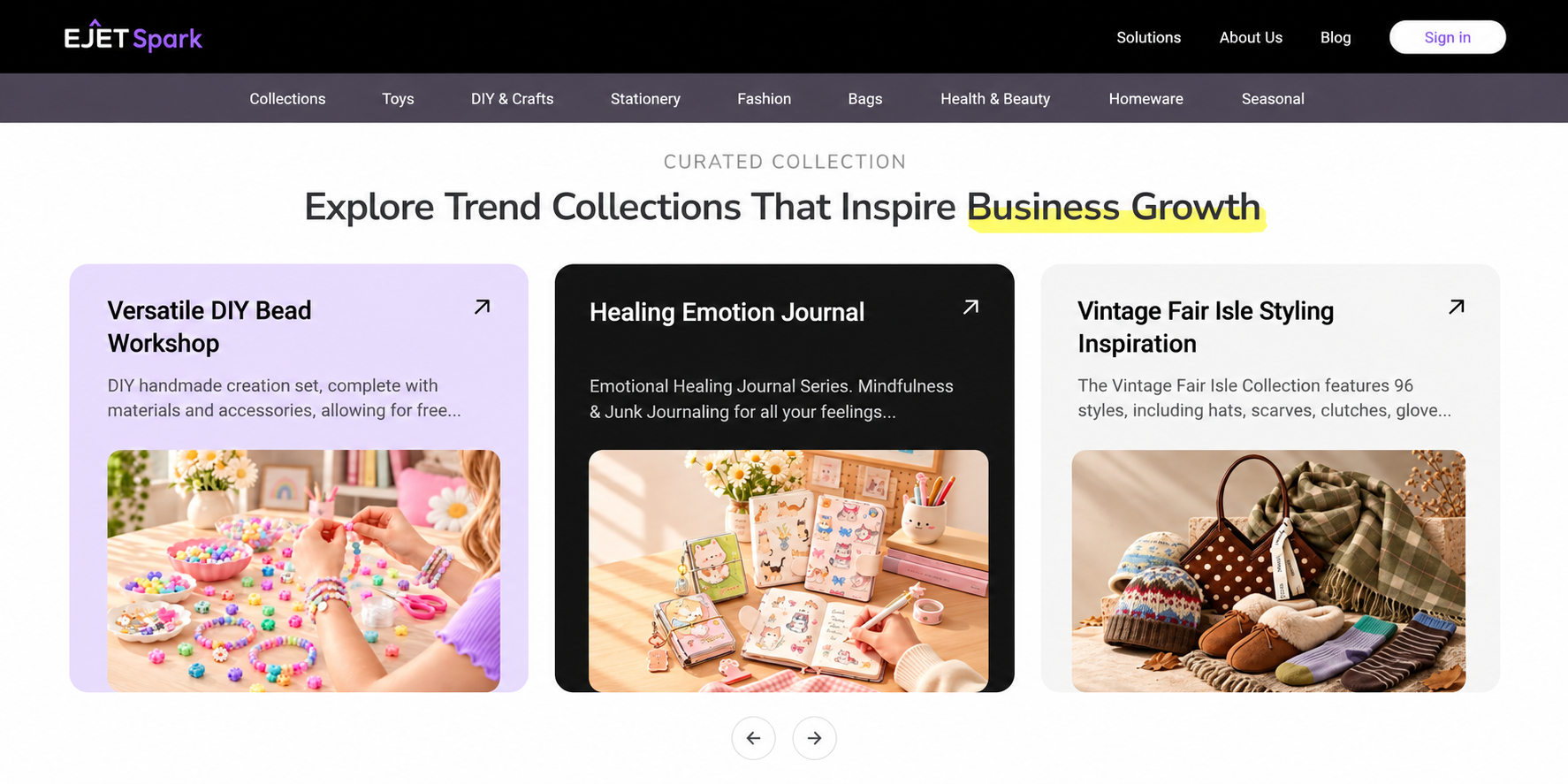
Website: ejetspark.com
SaleHoo offers supplier research resources aimed at ecommerce businesses, including wholesale and dropshipping sellers.
It differs from Alibaba because its value proposition centers on supplier discovery and research rather than functioning solely as a direct factory marketplace.
Businesses can use supplier directory resources to identify potential wholesalers and evaluate sourcing opportunities.
We recommend confirming current subscription costs, directory coverage, and supplier terms before purchasing access.
Best for: Ecommerce entrepreneurs seeking organized supplier research resources.
How to Choose the Best Alibaba Alternative for Your Business
Selecting a sourcing platform should begin with our business model, product requirements, purchasing volume, and target market.
A marketplace that works well for an established electronics importer may be unsuitable for a boutique retailer purchasing 20 units.
1. Compare minimum order quantities
MOQ determines the smallest order a supplier is willing to manufacture or sell.
For example, one factory may require 1,000 units for customized packaging, while another may accept 100 units using standard packaging.
We should evaluate whether the MOQ aligns with realistic sales demand and available working capital.
2. Calculate the total landed cost
The cheapest factory quotation is not necessarily the cheapest purchasing option.
The total landed cost includes the product price, packaging, domestic transportation, international freight, insurance, customs duties, applicable taxes, inspection fees, and other destination charges.
For example:
|
Cost Component |
Illustrative Amount |
|---|---|
|
500 products at $4 each |
$2,000 |
|
Packaging and labeling |
$150 |
|
International freight |
$450 |
|
Duties and nonrecoverable taxes |
$250 |
|
Inspection and handling |
$150 |
|
Total landed cost |
$3,000 |
|
Landed cost per unit |
$6.00 |
Illustrative calculation only. Actual customs charges, tax recovery, and shipping expenses depend on product classification, trade terms, destination, and shipment details.
In this example, a product advertised at $4 actually costs $6 per unit before domestic fulfillment, marketing, and selling expenses.
3. Evaluate manufacturing capabilities
We should establish whether the supplier is a manufacturer, trading company, wholesaler, or sourcing intermediary.
Each model offers advantages.
Manufacturers may provide greater production control, while trading companies may simplify sourcing across multiple product categories.
The most suitable supplier is the one capable of consistently meeting our requirements.
4. Verify product compliance
Regulatory requirements vary by product category and destination.
Depending on the product, relevant requirements may involve electrical safety, chemical restrictions, labeling, children's product testing, food-contact materials, or wireless equipment approvals.
We should never assume that a supplier's claim of certification proves that every product variation is compliant.
Alibaba vs. Alibaba Alternatives: Which Is Better?
|
Business Requirement |
Recommended Starting Point |
|---|---|
|
General international wholesale sourcing |
Alibaba.com |
|
Electronics supplier discovery |
Global Sources |
|
China factory-direct sourcing |
Made-in-China.com |
|
China domestic wholesale offers |
1688.com |
|
Small wholesale test orders |
DHgate |
|
Indian textile manufacturers |
IndiaMART |
|
US industrial manufacturers |
Thomasnet |
|
Independent retail brands |
Faire |
|
European supplier discovery |
Europages |
|
Dropshipping fulfillment |
CJdropshipping |
There is no single platform that performs best across every category.
For businesses pursuing long-term growth, using multiple sourcing channels often provides better visibility into supplier capabilities, pricing, and alternative production locations.
How to Find Reliable Manufacturers Outside Alibaba
Supplier selection should follow a repeatable due-diligence process.
Step 1: Prepare a detailed product specification
Before contacting suppliers, we should define materials, dimensions, performance requirements, packaging, labeling, expected quantities, and target delivery dates.
For custom products, technical drawings and reference samples reduce ambiguity.
Step 2: Shortlist at least three suppliers
Comparing several qualified manufacturers provides insight into market pricing, manufacturing capabilities, and realistic production schedules.
We should avoid choosing a supplier based exclusively on the lowest quotation.
Step 3: Verify business credentials
Useful verification measures include checking business registration information, reviewing available factory audits, confirming company addresses, and requesting relevant export experience.
For high-value orders, independent supplier verification may be worthwhile.
Step 4: Order samples
Samples allow us to assess workmanship, materials, product performance, packaging, and consistency with specifications.
For custom-manufactured products, we recommend retaining an approved reference sample.
Step 5: Establish quality-control standards
A written purchase agreement should identify acceptable quality criteria, inspection methods, defect classifications, and remedies for nonconforming products.
Independent pre-shipment inspections can reduce the likelihood of receiving unsuitable inventory.
Step 6: Use appropriate payment protection
Payment terms should reflect the transaction value, supplier relationship, and available protections.
For new suppliers, we should avoid unnecessarily risky payment arrangements and verify bank-account details through an independently confirmed communication channel.
Step 7: Confirm international shipping responsibilities
We should establish which party handles export clearance, freight, insurance, import clearance, and applicable duties.
Recognized Incoterms, such as FOB, FCA, and DDP, can help allocate responsibilities when correctly specified in the purchase agreement.
Best Countries for Product Sourcing Beyond China in 2026
Vietnam
Vietnam is an important sourcing destination for garments, footwear, furniture, and selected electronics products. We recommend evaluating supplier capacity and imported material dependencies.
India
India offers manufacturing options for textiles, home furnishings, leather products, engineering goods, and specialty merchandise.
Mexico
Mexico is particularly relevant to North American buyers seeking automotive components, metal fabrication, electronics assembly, and regional manufacturing.
Turkey
Turkey offers established manufacturing capabilities in textiles, apparel, furniture, ceramics, and household products, with useful geographic access to European markets.
Country selection should reflect actual factory capabilities, trade requirements, production costs, infrastructure, and destination-market logistics rather than generalized assumptions about national manufacturing quality.
Common Product Sourcing Mistakes to Avoid in 2026
Even experienced importers can encounter problems when expanding their supplier networks.
Choosing suppliers solely by price: Extremely low quotations may omit essential costs or indicate differences in materials and product specifications.
Skipping sample verification: Product photographs and digital catalogs cannot establish consistent manufacturing quality.
Ignoring intellectual property rights: Buyers should confirm that products, logos, designs, and packaging do not infringe third-party rights.
Overlooking regulatory requirements: Noncompliant products can lead to customs delays, recalls, marketplace restrictions, and financial losses.
Ordering excessive inventory: Large initial orders can create unnecessary storage costs and cash-flow pressure.
Depending on one manufacturer: A single supplier creates concentration risk when production, logistics, or commercial relationships are disrupted.
We recommend maintaining documented specifications, verified supplier records, and alternative sourcing options for commercially important products.
Frequently Asked Questions About Alibaba Alternatives

What is the best alternative to Alibaba in 2026?
Global Sources and Made-in-China.com are strong alternatives for international supplier discovery and factory-direct manufacturing. The best choice depends on product category, MOQ, destination market, and customization requirements.
Which Alibaba alternative offers the cheapest wholesale products?
1688.com can provide competitive domestic Chinese wholesale offers, but international buyers must consider sourcing-agent fees, shipping, payment arrangements, duties, and taxes. The lowest listing price does not necessarily produce the lowest landed cost.
Are there Alibaba alternatives with no minimum order quantity?
DHgate and some dropshipping services offer products that can be purchased individually. Availability depends on the seller and product. Custom manufacturing generally involves minimum quantities or additional setup costs.
What are the best Alibaba alternatives for US suppliers?
Thomasnet is particularly useful for discovering US industrial manufacturers and contract manufacturing services. Other options include direct manufacturer websites, industry associations, and specialized trade exhibitions.
Which platforms are best for sourcing products from India?
IndiaMART and TradeIndia are useful starting points for researching Indian manufacturers and wholesalers. Both cover multiple industries, including textiles, machinery, packaging, and consumer products.
Can we find private-label manufacturers outside Alibaba?
Yes. Global Sources, Made-in-China.com, IndiaMART, and industry-specific supplier directories can help identify manufacturers offering OEM or ODM services. Customization capabilities and intellectual property arrangements must be confirmed directly.
Is 1688 cheaper than Alibaba?
Some products on 1688 are advertised at lower prices because the marketplace primarily serves China's domestic market. However, purchasing assistance, domestic transportation, export arrangements, and international freight may reduce or eliminate the apparent savings.
How do we avoid scams when sourcing from wholesale platforms?
We recommend verifying company registration, requesting samples, checking manufacturing capabilities, documenting contract terms, using appropriate payment protections, and arranging independent inspections when justified. No marketplace can eliminate supplier risk entirely.
What is the best Alibaba alternative for Amazon FBA sellers?
Made-in-China.com and Global Sources are useful for private-label manufacturing, while 1688 may appeal to experienced buyers working with sourcing agents. Amazon sellers should also verify marketplace-specific product, packaging, labeling, and compliance requirements.
Should we source from China or other countries in 2026?
We recommend comparing qualified manufacturers across several countries rather than making sourcing decisions based on geography alone. China remains a significant manufacturing center, while India, Vietnam, Mexico, Turkey, and other markets provide valuable alternatives for particular industries.
Final Verdict: The Best Alibaba Alternatives for Product Sourcing in 2026
The best Alibaba alternatives in 2026 offer more than access to wholesale catalogs. They help businesses discover specialized manufacturers, compare production capabilities, diversify procurement locations, and build resilient supply chains.
For factory-direct sourcing, we recommend starting with Made-in-China.com and Global Sources. For competitive domestic Chinese wholesale offers, 1688.com deserves consideration. Businesses seeking smaller orders can explore DHgate, while retailers purchasing finished branded inventory may prefer Faire.
For geographic diversification, IndiaMART, Thomasnet, and Europages provide useful starting points for supplier discovery in India, North America, and Europe.
Ultimately, successful product sourcing depends on selecting the right manufacturing partner, verifying product quality, understanding total landed costs, and establishing clear commercial agreements.
By combining multiple sourcing platforms with disciplined supplier verification and quality control, we can reduce procurement risks, improve purchasing decisions, and create a more competitive supply chain in 2026 and beyond.

_1751507038923.png)