Amazon’s best-selling products span everyday essentials, beauty items, kitchen tools, electronics, clothing, and pet supplies.
Its Best Sellers lists reveal sales leaders within individual categories, making them useful starting points for shopping and product research—not guarantees of quality or profitability.
This article explains which categories to explore, provides dated product examples, and shows how to evaluate popular items before buying or selling them.
What makes a product a bestseller on Amazon?
An Amazon bestseller is a product with strong sales performance relative to other products in its category. Amazon’s Best Sellers Rank, or BSR, reflects sales volume, with recent sales weighted more heavily than older sales. A lower number indicates a stronger position within the relevant category; it does not establish that an item is the best choice for every customer.
Three distinctions make these lists easier to interpret:
- Category matters. A strong rank in a narrow subcategory is not equivalent to leading an entire department.
- Marketplace matters. Rankings can differ between Amazon’s US store and its stores in other countries.
- Sales rank is not search position. Appearing prominently for a keyword and ranking highly by category sales are different measures.
Use these distinctions to keep comparisons fair. Compare similar products within the same category and marketplace, then examine their features separately. Avoid treating a bestseller badge as a substitute for checking dimensions, compatibility, materials, or suitability.
For sellers, make the next question specific: identify what you could offer that the existing listing does not. For shoppers, ask whether the product solves your problem without unnecessary compromises. Those questions turn a popularity list into a decision tool.
Categories worth exploring for Amazon top sellers
Amazon highlights popular product types across Beauty & Personal Care, Kitchen & Dining, Automotive, Clothing, Electronics, and Appliances. The categories below are a research shortlist, not a verified ranking of departments by total revenue. Start with a category you understand well enough to evaluate critically.
Home, kitchen, and dining essentials
Amazon’s product research guidance identifies food scales, travel tumblers, water bottles, meat thermometers, rice cookers, and vegetable slicers among popular kitchen product types. These examples provide several directions for research without requiring you to chase one particular brand.
For shoppers, compare practical details before appearance: storage dimensions, cleaning instructions, capacity, and replacement parts. A large water bottle may be inconvenient if it cannot fit where you intend to carry it. A kitchen gadget deserves a place on your shortlist only if it improves a task you actually perform.
For sellers, begin with a defined use case, such as compact meal preparation or portable drinkware. Compare products serving that use case rather than every item in Home & Kitchen.
Beauty and personal care
Moisturizers, makeup, cotton swabs, and acne patches appear in Amazon’s examples of popular beauty products. Use those product types as starting points, then separate routine essentials from items attracting temporary attention.
When shopping, check the exact formulation, fragrance, package size, and application instructions. Do not assume that feedback about one variation describes another. Keep personal preferences and known sensitivities ahead of a product’s popularity.
For product research, organize customer comments around specific expectations: packaging, texture, ease of dispensing, portability, or value per unit. Avoid turning customer anecdotes into promises about results. A useful opportunity statement identifies an experience you can improve and verify, not an outcome you cannot substantiate.
Electronics and device accessories
Amazon’s trending-product guidance includes surge protectors, device chargers, smartphone screen protectors, and gaming headsets. Treat these as distinct niches rather than one interchangeable electronics market.
Build your comparison around compatibility first. Record the supported device, connector, required power supply, included accessories, and features you need. If a listing leaves a critical specification unclear, resolve that uncertainty before purchasing.
For sellers, use the same discipline when assessing samples. Test the advertised functions rather than relying on packaging language. Consider whether you can provide clear setup instructions and answer likely compatibility questions; a confusing product is not an attractive opportunity simply because similar items rank well.
Clothing, shoes, and everyday accessories
Amazon identifies clogs, running shoes, slippers, hoodies, leggings, and underwear among popular apparel product types. For research purposes, narrow these broad groups by activity, fit, or intended wearer.
A shopper comparing leggings, for example, should decide whether the priority is exercise, lounging, pockets, fabric feel, or coverage. Then check the size chart and comments relevant to that use. Do not let an appealing photograph answer questions it cannot resolve.
Sellers should compare individual variations carefully. Build a sample checklist covering measurements, seams, fabric description, and consistency between units. Before expanding into many colors and sizes, establish how you will check and maintain the product details customers rely on.
Health, household, and replenishable supplies
Amazon’s trending-product examples include whey protein powder in Health & Household and wipes in Baby. These illustrate why replenishable goods deserve a different evaluation from occasional purchases.
For shopping comparisons, calculate the cost per usable unit, not just the price per package. Check quantity, storage space, and whether you can use the contents within the stated shelf life. A larger pack is not automatically a better purchase.
For sellers, build a review process around packaging integrity, storage instructions, product information, and supply consistency. Do not select a replenishable item solely because repeat orders seem attractive. First establish that you can source, describe, store, and deliver the exact product reliably.
Pet supplies
Amazon’s pet-selling guidance covers food, treats, litter, grooming tools, collars, beds, carriers, and enrichment products. It distinguishes everyday replenishment needs from accessories and other product segments.
For shoppers, start with the animal rather than the bestseller list. Record relevant measurements, intended activity, cleaning needs, and supervision instructions. Compare carriers by the space your pet needs, for example, rather than choosing from photographs alone.
For sellers, choose a segment you can evaluate responsibly. Request samples and examine closures, seams, instructions, and sizing information. Review Amazon’s applicable requirements before committing to inventory, especially when considering food, treatments, or other products with additional restrictions.
Toys, games, and activity products
Amazon includes writing tablets among its trending toy examples and identifies holiday seasonality as a consideration in this category. Use that context when interpreting a product’s recent position.
For gift shopping, check the stated age range, included components, setup requirements, and whether additional purchases are necessary. Think about where the recipient will use the item and who will help with assembly or storage.
For selling, separate the appeal of the concept from the quality of the execution. Inspect samples for completeness and instruction clarity. Ask whether your proposed product offers a meaningful improvement, such as easier organization, rather than simply different packaging around an existing idea.
Best-selling product examples, with their limits made clear
Specific examples make research more concrete, but rankings need a date. The following items appeared in third-party records of Amazon’s US Best Sellers lists on November 20, 2026. These are dated observations, not promises about their positions when you read this article.
|
Category |
Products recorded in the category’s top five |
Details to compare |
|---|---|---|
|
Beauty & Personal Care |
eos Shea Better Body Lotion, Vanilla Cashmere; Hero Cosmetics Mighty Patch Original; Clean Skin Club Clean Towels XL |
Exact product, quantity, formulation, and intended routine |
|
Kitchen & Dining |
Stanley Quencher H2.0 FlowState Tumbler; Owala FreeSip bottle; KitchenAid silicone oven mitt set |
Capacity, lid design, dimensions, care instructions, and set contents |
|
Electronics |
Apple EarPods with USB-C; Apple AirPods Pro 3; Apple AirTag, second generation; Roku Streaming Stick HD |
Device compatibility, generation, included hardware, and required services |
These examples come from ParseShelf’s recorded category snapshots. They are useful illustrations, but you should confirm the exact listing and live rank directly on Amazon before making a decision.
Read the final column as a comparison prompt, not a product endorsement. If you are researching drinkware, compare several lid designs and capacities. If you are shopping for electronics, eliminate incompatible options before considering popularity.
For sellers, study the customer need behind the product without assuming that reselling the same brand is feasible. Write down what customers are trying to accomplish, which alternatives serve them, and what evidence you still need. Keep observation separate from your proposed business decision.
How do you find best-selling products on Amazon?
To find best-selling products on Amazon, open its Best Sellers section, choose a department, and narrow your research to the most relevant subcategory. Check individual listings for their Best Sellers Rank, then compare those results with related discovery lists and your own product requirements. Amazon recommends its Best Sellers lists as a starting point for identifying popular products.
Start narrow and record comparable information
Choose one problem or purchase goal before browsing. For example, research a portable lunch container rather than the entire kitchen department. Give yourself a clear reason to include or exclude each candidate.
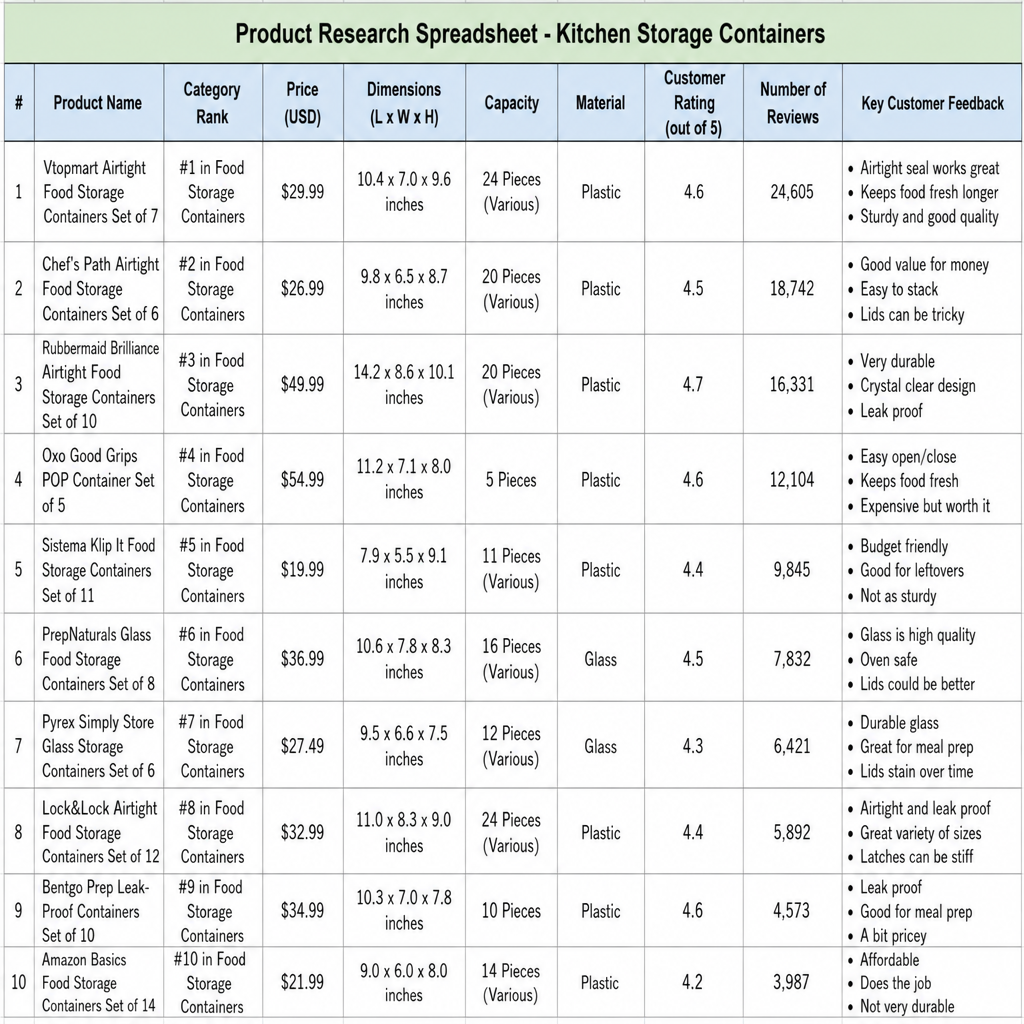
Create a simple research sheet with these fields:
- Product identity: Exact name, variation, and listing identifier.
- Observation: Date, marketplace, category, and displayed rank.
- Offer: Price, quantity, condition, and included components.
- Fit: Dimensions, materials, compatibility, or other essential requirements.
- Uncertainty: Missing specifications, unclear instructions, or questions to investigate.
- Decision: Keep, reject, or revisit—with a brief reason.
Record the full category name alongside the rank. This prevents you from later comparing two numbers that describe different competitive groups. Keep observations from separate dates rather than overwriting them, so you can review changes without relying on memory.
Use discovery lists for different purposes
Amazon’s Movers & Shakers lists highlight products with large sales-rank gains over the preceding 24 hours. Hot New Releases provides another view of emerging products, while Most Wished For can help you explore items customers are saving. These lists answer different research questions from an established bestseller list.
Use a practical sequence: discover an item, inspect its category, examine the listing, and return later to reassess it. Do not make a large purchasing decision simply because one snapshot looks exciting. Decide in advance what further evidence would justify moving forward.
If you sell on Amazon, Product Opportunity Explorer offers additional information about niches, search behavior, purchasing, competition, reviews, and returns. Use it to investigate a customer need rather than searching only for a product to copy.
Read reviews with a specific question in mind
Amazon recommends using reviews to identify customer preferences and possible product improvements. Make that exercise focused: choose a comparison question before you read, such as whether a container is easy to clean or whether setup instructions are understandable.
Group observations into product design, listing clarity, packaging, and delivery. Then distinguish an isolated complaint from a theme worth investigating. Use feedback to create a testable checklist, not a collection of dramatic quotations.
A hypothetical bottle comparison might lead you to test how easily each lid disassembles and whether the parts can be reassembled correctly. That is more actionable than concluding that customers simply want “better quality.”
How can you find best-selling products on Amazon in the $300 range?
To research best-selling products on Amazon in the $300 range, start with the relevant category bestseller list, then check the current prices of shortlisted products and their individual ranks. Treat “around $300” as a shopping budget, not a category ranking. Define your acceptable price band before comparing products so discounted and premium options do not distract from your actual needs.
For this article, the phrase means approximately $300 in US dollars. The following are suggested research directions, not verified current bestsellers or claims that particular models are available at that price.
|
Research direction |
Comparison priorities |
|---|---|
|
Cleaning appliances |
Floor suitability, dimensions, maintenance, accessories, and replacement parts |
|
Coffee equipment |
Drink preferences, workflow, cleaning, counter space, and required extras |
|
Headphones and audio |
Comfort, device compatibility, controls, charging, and intended environment |
|
Kitchen appliances |
Useful capacity, storage, cleaning, included attachments, and everyday tasks |
|
Computer monitors |
Workspace dimensions, required connections, adjustability, and intended work |
Start with the task you want to improve. If you want easier floor cleaning, write down your surfaces and storage constraints. If you want a monitor, identify the connections and desk space you need before browsing rankings.
Then compare the complete purchase. Record required accessories and any ongoing service or maintenance expenses you identify. Decide whether the added features of a more expensive option will actually be used, rather than treating a higher price as evidence of a better fit.
For sellers investigating this price band, run the numbers before ordering stock. Amazon’s costs depend on the selling plan, product category, fulfillment method, and optional services; use its current pricing information rather than a blanket fee assumption.
Build a separate estimate for each candidate. Include your sourcing cost, delivery to your fulfillment locati0n, packaging, selling fees, fulfillment, advertising assumptions, and an allowance for problems. Label estimates clearly and replace them with actual figures as evidence becomes available.
Turn bestseller research into a buying or selling decision
The best Amazon products for your needs are not necessarily the products with the lowest rank. Use popularity to build a shortlist, then apply criteria that match your situation. A shopper needs a suitable purchase; a seller needs a viable offer and an operational plan.
A shopper’s final comparison
Before checking out, complete this checklist:
- Confirm the exact item. Check the model, size, color, quantity, and condition against your notes.
- Verify the essentials. Resolve questions about fit, dimensions, compatibility, and included accessories.
- Review the offer. Read the displayed seller information, delivery estimate, and applicable return terms.
- Compare usable value. Choose the quantity and features you expect to use, not simply the largest pack or longest feature list.
- Check your original goal. Explain in one sentence why this item solves the problem you started with.
If that final sentence is difficult to write, pause. You may have found a popular product without finding a useful purchase. Return to your requirements and remove options that do not satisfy them.
A seller’s validation checklist
Amazon’s selling guidance recommends considering demand, pricing, customer feedback, seasonality, size, weight, sourcing, and applicable product restrictions. Use those factors to challenge your idea before investing in it. (sell.amazon.com)
Turn each factor into a concrete next step:
- Demand: Gather observations across multiple dates and investigate the relevant niche.
- Differentiation: State the specific customer need your offer would address.
- Sourcing: Obtain samples, confirm specifications, and establish how you will verify consistency.
- Economics: Estimate all relevant costs using conservative assumptions.
- Operations: Plan storage, packaging, fulfillment, customer questions, and replenishment.
- Eligibility: Check the requirements applying to your product and selling account before purchasing inventory.
Set rejection criteria as carefully as approval criteria. For example, reject a candidate if a supplier cannot clarify a critical specification or if your estimate depends on an optimistic selling price. A disciplined “no” is a useful research result.
Write a short decision memo before committing. Include the evidence supporting the idea, the most important uncertainty, and the next test that could change your mind. This keeps enthusiasm accountable to evidence.
Use Amazon bestsellers as a starting point, not a verdict
Exploring top-selling categories and best-selling products on Amazon is most useful when you keep the decision in view. Choose a relevant category, compare exact products, record what you observe, and investigate what remains uncertain.
For shopping, prioritize fit and usable value. For selling, prioritize a defensible offer, reliable sourcing, and workable economics. Let popularity guide your attention—not make the decision for you.
Frequently Asked Questions About Best-Selling Products on Amazon
What criteria determine if a product is a best-seller on Amazon?
A product's best-seller status is determined by its Best Sellers Rank (BSR), which reflects sales volume in comparison to other products in its category. More recent sales are weighted more heavily, and a lower rank indicates stronger performance.
How can I find the best-selling products in specific categories on Amazon?
You can explore Amazon’s Best Sellers section, select a department, and narrow it down to subcategories that interest you. Examine the individual listings for their Best Sellers Rank to identify top-performing products.
Is the Amazon Best Sellers list updated regularly?
Yes, Amazon updates its Best Sellers lists frequently, reflecting changes in sales patterns in real time. This means the best-selling products can shift based on inventory, promotions, and consumer trends.
Are the best-selling products on Amazon guaranteed to be high quality?
Not necessarily. While the best-sellers may indicate popularity, it’s important to evaluate each product individually based on features, specifications, reviews, and your specific needs before making a purchase.
How can I use the Amazon Best Sellers lists for product research as a seller?
Sellers can use the Best Sellers lists to identify popular products, analyze customer needs, evaluate competition, and discover potential gaps in the market that they can exploit with unique offers or improved variations.